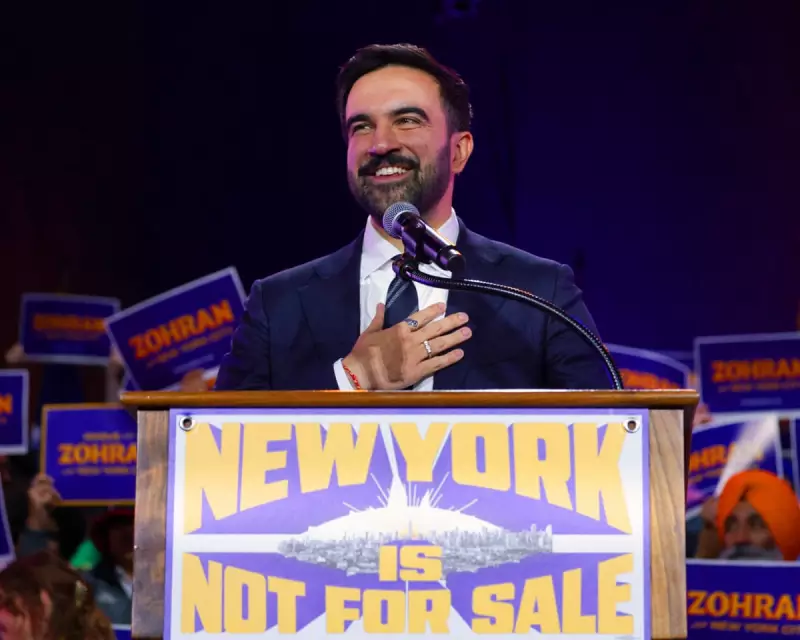
In a historic ceremony held just after midnight, Zohran Mamdani was sworn in as the 111th mayor of New York City. The inauguration took place in a disused subway station beneath City Hall, with State Attorney General Letitia James administering the oath. At 34, Mamdani is not only the city's first Muslim mayor but also the first to hold office as a democratic socialist under the Democratic party banner.
The Mamdani Policy Platform: A Blueprint for Change
Mamdani's victory was built on a sweeping policy agenda centred on economic rights and affordability, which he summarised as a response to the simple fact that "New York is too expensive." His transition team has already appointed over 400 New Yorkers as advisers to help turn these ambitious plans into reality.
A cornerstone of his platform is a freeze on rent increases for the city's 2 million rent-stabilised apartments. While he must navigate the existing Rent Guidelines Board to achieve this, he has also pledged to triple the production of affordable, union-built homes, aiming for 200,000 new units over the next decade.

To tackle the high cost of living directly, Mamdani proposes innovative solutions like municipal grocery stores operating in city-owned buildings and selling at wholesale prices. He also plans to eliminate all bus fares on city buses and build new bus lanes to speed up journeys, citing that one in five New Yorkers struggles with transport costs.
Funding a Progressive Vision
The estimated annual cost of Mamdani's programme is a substantial $10 billion. To fund it, he intends to raise the top corporate tax rate from 7.25% to 11.5%, projected to generate $5 billion yearly. An additional 2% tax on the top 1% of earners—roughly 34,000 households earning over $1 million—is expected to raise another $4 billion.
Other key pledges include establishing a Department of Community Safety to take a public health approach to violence prevention, which may involve deploying civilian mental health experts instead of police to certain crises. In education and childcare, he promises free childcare for all children from six weeks to five years old and support packages for new mothers.
Governing in a Complex Political Landscape
Mamdani has acknowledged the challenge ahead, having stated he campaigned "in poetry" but must now govern "in prose." His agenda faces significant hurdles, including needing approval from the state government, of which New York City is technically a part. Furthermore, he has positioned himself against policies from the Trump administration, vowing to strengthen New York's sanctuary city status and end cooperation with federal immigration authorities.
As his term begins with a public block party on Broadway, the focus shifts to the practical implementation of one of the most progressive municipal manifestos in modern American history. The success of his affordability agenda will define the tenure of New York City's newest mayor.