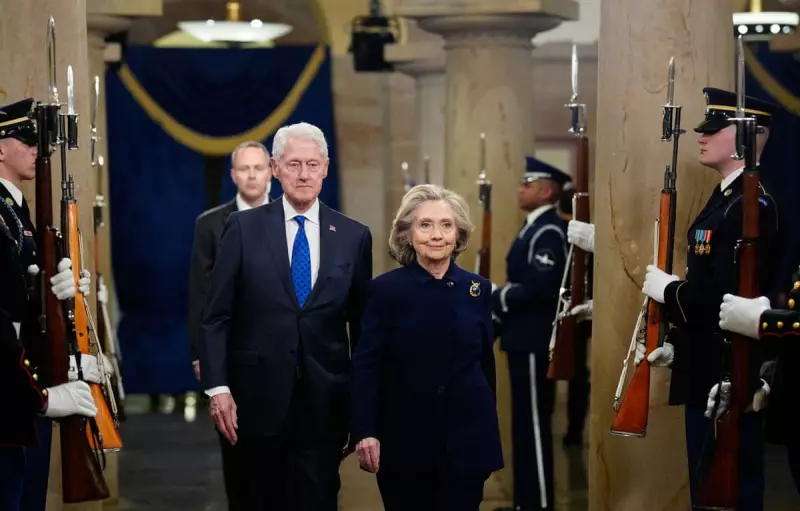
Former US President Bill Clinton and former Secretary of State Hillary Clinton have publicly refused to comply with congressional subpoenas demanding their testimony in the House investigation into the government's handling of convicted sex offender Jeffrey Epstein.
A Defiant Stand Against the Committee
In a strongly worded letter dated Monday, attorneys for the Clintons declared the subpoenas from the Republican-led House oversight committee to be "invalid and legally unenforceable." They argued the demands were untethered to a valid legislative purpose and represented an "unprecedented infringement on the separation of powers." The legal team further claimed the move was a political tactic, stating it was "nothing more than a ploy to attempt to embarrass political rivals, as president Trump has directed."
The subpoenas, issued in August by committee chair James Comer, commanded Bill Clinton to appear for testimony by Tuesday, 21 January 2025, and Hillary Clinton by Wednesday, 22 January. Following the former president's non-appearance, Comer told reporters at the US Capitol that he would move to hold Clinton in contempt of Congress as early as next week.

Political Accusations Fly in Both Directions
Comer sought to underscore the bipartisan nature of the initial subpoena vote, stating, "No one’s accusing Bill Clinton of any wrongdoing. We just have questions, and that’s why the Democrats voted along with Republicans to subpoena Bill Clinton." The investigation aims to review the government's actions concerning Epstein, who died by suicide in a federal jail in 2019 while awaiting trial on sex trafficking charges.
In a separate statement, the Clintons launched a broadside against the committee's conduct and the Republican agenda. They criticised Comer for a slow-paced inquiry that has "prevented progress in discovering the facts," noting only two witnesses had been interviewed. They also attacked Republican policies on immigration and the pardoning of January 6 insurrectionists, suggesting that stalling their "cruel agenda" by fighting the subpoena would be their contribution.
The Lingering Shadow of the Epstein Case
The controversy was reignited last July when the Justice Department declared the Epstein case closed, contradicting conspiracy theories promoted during the 2024 campaign. A subsequent bipartisan push led to legislation, passed in November, requiring the release of all government files related to Epstein.
While the deadline was 19 December 2024, the department continues to release documents in batches. Photographs from the files, made public in December, include images of Bill Clinton, though he has consistently denied any knowledge of Epstein's crimes and has not been accused of wrongdoing by survivors. Last week, lawmakers asked a federal judge to appoint a special master to compel the full release of all Epstein-related documents.