

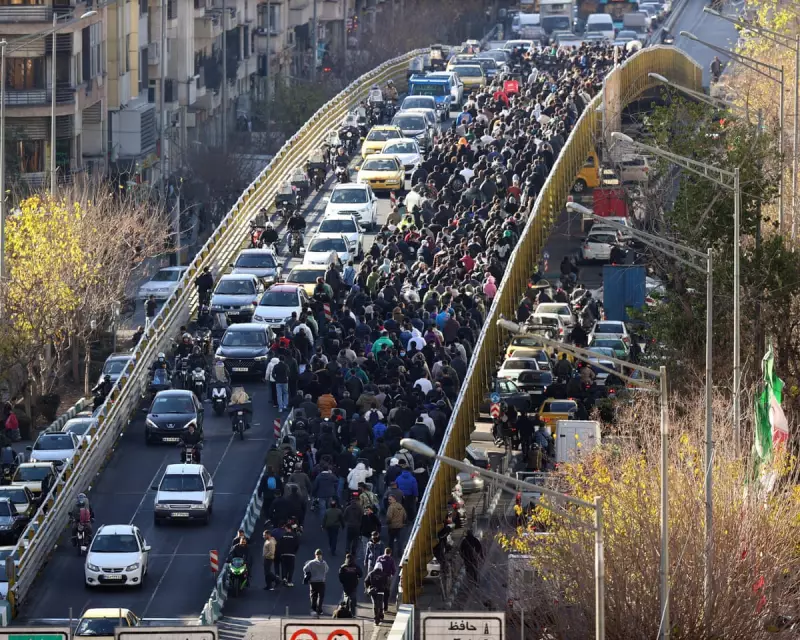
Iran is witnessing its most significant wave of civil unrest since the 2022 Mahsa Amini protests, as a severe economic crisis has paralysed university campuses, shuttered shops, and blocked streets nationwide. The demonstrations, now in their fourth day, have evolved from anger over plummeting living standards into a broader challenge against the country's governance.
Currency Collapse Becomes Breaking Point for Struggling Citizens
The immediate catalyst for the latest upheaval was a dramatic plunge in the value of Iran's national currency. On Sunday, the Iranian rial hit a historic low of 1.42 million to the US dollar, representing a staggering devaluation of more than 56% in just six months. This unprecedented depreciation has sent inflation soaring, with food prices now an average of 72% higher than this time last year.
For citizens like Alborz, a textile merchant from Isfahan and a father of four, this was the final straw. Speaking to the Guardian under a pseudonym due to security fears, he voiced the desperation felt by many: "What will my children eat? Do we have to bring suitcases of cash to simply buy bread?" His decision to close his shop and join the protests mirrors actions taken by merchants and students across the country, from the capital Tehran to numerous other cities.

The economic turmoil is compounded by some of the world's most intense international sanctions, which have crippled Iran's access to foreign exchange and frozen funds abroad. The nation's growing reliance on imports has exacerbated the crisis, leaving ordinary Iranians to bear the brunt.
From Economic Grievance to Political Rebellion
While sparked by financial hardship, the protests have rapidly taken on a overtly political character. Social media channels are filled with videos showing protesters chanting anti-government slogans such as "Death to the dictator" and "Woman, life, freedom" – the latter a powerful slogan from the 2022 movement. In Tehran, footage captured a lone man blocking security forces on motorbikes as crowds fled teargas.
These chants carry severe risk, as they have previously led to prison sentences for activists. The protests are the largest since the nationwide uprising triggered by the death in custody of 22-year-old Mahsa Amini, which was violently suppressed by authorities.
"For years now, we have slowly but surely made significant changes to our lifestyles because of this corrupt government. This was the last nail in the coffin," said Alborz, expressing a sentiment of finality. "We want this regime gone and now there's no way this regime will continue."
Government Offers Dialogue Amid Crackdown and External Threats
The Iranian government, still reeling from a brutal 12-day conflict with Israel in June, has called for dialogue with protest leaders. President Masoud Pezeshkian has instructed his administration to listen to the "legitimate demands" of those demonstrating.
However, protesters remain deeply sceptical of this overture. Farhad, a 19-year-old student activist who also used a pseudonym, dismissed the offer. "If the administration wanted to talk, they wouldn't fire teargas, shoot at protesters... There is no willingness from any of us to talk to them, we want the mullahs gone and we want democracy," he stated.
Reports from the ground suggest a harsh response. Students describe security services confiscating IDs, beating, and arresting protesters. One individual in Tehran shared an image of a metal pellet allegedly fired at them by security forces, though this claim could not be independently verified.
Simultaneously, Iran faces external pressures. On Monday, US President Donald Trump hinted at potential military action, suggesting the US would "knock them down" if there was renewed nuclear activity—a claim Iran denies, insisting its nuclear programme is peaceful. The Iranian Revolutionary Guards Corps (IRGC) issued a statement vowing to confront any "sedition, unrest" or security threats, blaming "enemies" for psychological warfare.

Despite the intimidation, protesters vow to continue. Alborz reported that people blocked roads and challenged security forces directly. "People sat on the roads and chanted that they could kill us, but we wouldn't let them pass," he said. With expectations that trade unions may soon join the strikes, the movement shows little sign of abating as economic despair fuels a potent demand for political change.





