

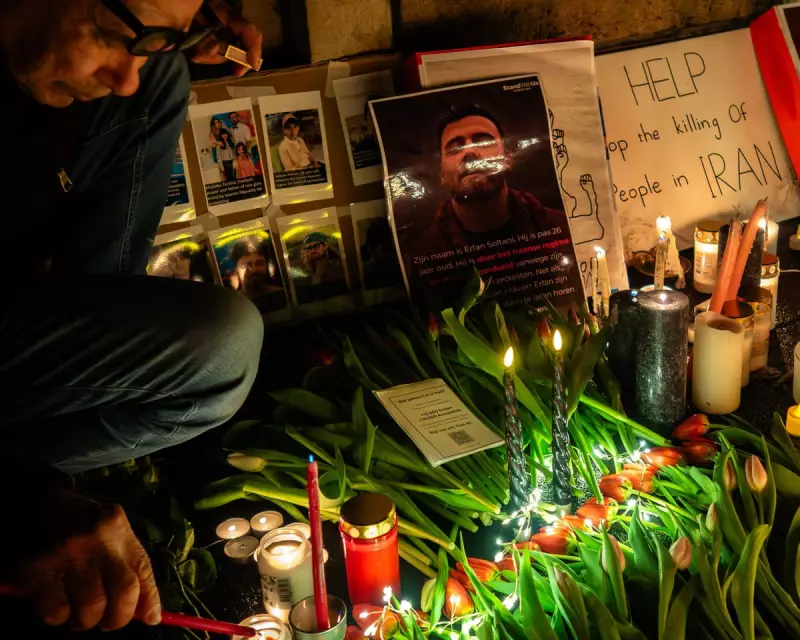
This week, a landmark and grim chapter unfolded in the Middle East, as the Iranian regime launched a brutal crackdown on its own people. While an internet blackout imposed by Tehran has obscured the full picture, credible reports suggest a staggering death toll. One official has admitted to 2,000 fatalities, while other sources, including CBS News, estimate the number could be as high as 12,000.
A Nation Pushed to the Brink
The protests, which erupted across all 31 of Iran's provinces, represent a profound expression of all-out fury against the ruling theocracy. This is not a movement defined by a single grievance, like the 2022 rebellion against the compulsory hijab, but a comprehensive rejection of a regime that has failed its citizens on every front.
The Iranian economy is broken, with a currency rendered nearly worthless. The nation's oil wealth has been squandered on ambitions of regional dominance, funding proxies like Hezbollah and the Houthis, while domestic infrastructure crumbles. Beyond material privation, Iranians are systematically denied fundamental freedoms: democracy is a sham, censorship is rampant, and misogyny is official state policy. The regime's disdain for life is starkly illustrated by its execution of over 2,000 citizens in 2025 alone.

Empty Promises and a Bloody Reality
The protesters, aware of the brutal history of state responses in 2009, 2019, and 2022, took to the streets regardless. Their resolve was seemingly bolstered by direct encouragement from US President Donald Trump, who urged them to "keep protesting" and promised that "HELP IS ON ITS WAY."
That promised rescue has not materialised, echoing the tragic betrayal of Iraqi Shia and Marsh Arabs in 1991. However, experts warn that US military intervention is not the answer. Suzanne Maloney, an advisor to both Democratic and Republican administrations, argues that the regime is so entrenched it would simply "replace itself," leaving a dangerous power vacuum.
What the World Can Do
While bombs are not the solution, the international community is not powerless. There are concrete steps that can be taken to pressure Tehran and support the Iranian people:
- Tighten Sanctions: Existing economic pressure can be intensified, with a senior UN official noting "there's still a long way to go." This includes targeting individuals complicit in the violence and core institutions like the Islamic Revolutionary Guard Corps.
- Cyber and Technological Support: Cyber operations could disrupt the organs of repression, such as the morality police. Providing internet access via systems like Starlink would break the regime's information blackout.
- Maintain Attention: Perhaps the simplest yet most vital action is to refuse to look away. As media coverage wanes, the world must continue to bear witness to the horror, denying the regime the silence it craves.
Shrugging as thousands are gunned down, blinded by pellet guns, and piled into morgues is not a moral stance. Solidarity with the oppressed must be consistent, not conditional on a regime's geopolitical alliances. The people of Iran are crying out for help; the very least the world can do is listen.






