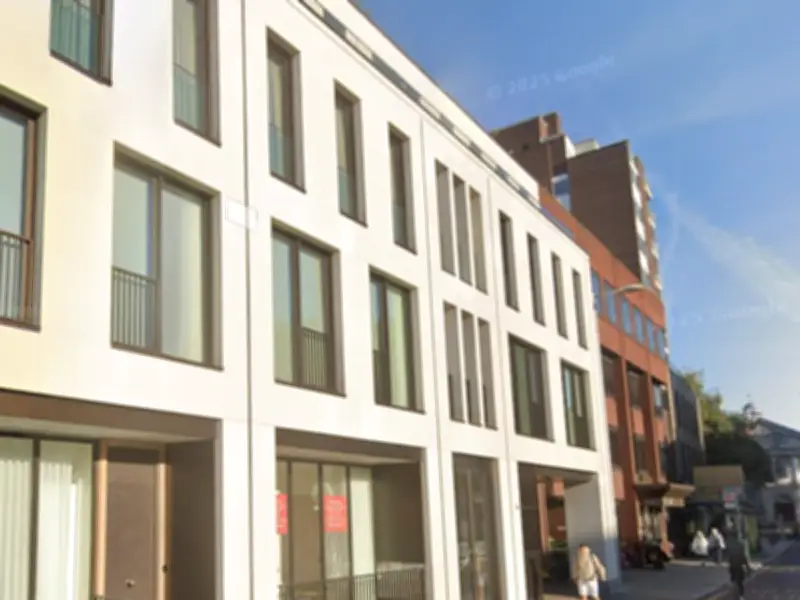
A Chelsea resident's objection that a proposed development would plunge his home into 'near total permanent darkness' has been overruled by Kensington and Chelsea Council. The Planning Sub-Committee approved a height increase for a five-storey building on the site of a former post office in Chelsea Manor Street on Wednesday, June 23.
Resident's concerns over daylight reduction
Rod Holliman, who lives in a ground-floor apartment in Almeda House directly adjacent to the development, told the committee that the two-metre height increase would severely diminish his living conditions. 'My home would be plunged into near total permanent darkness forcing me to rely on artificial light even at midday,' he said.
Holliman's window is already deeply recessed under an architectural overhang, resulting in a vertical sky component (VSC) of just 5.5 percent. The Building Research Establishment recommends an ideal VSC of 27 percent. The development would reduce this by 2.9 percent, a 52 percent reduction. Holliman argued that the increase was solely due to the height addition: 'The only window that attracts daylight is the window being affected. We will not get any meaningful daylight at all.'

Developer's response and committee decision
Huite Capital Limited, the developer, had taken over from a previous applicant. Drew Steadman, a daylight and sunlight specialist for the applicant, stated that the VSC change was 'very small' and that most of the room would still receive direct sunlight. He noted that the proportional reduction appeared larger because the baseline VSC was already low, and the scheme 'performs well overall in its context in our view'.
Council officers recommended approval, citing that the scheme's benefits outweighed the harms. Councillor Anne Cyron, Vice-Chair of the Planning Applications Sub-Committee, acknowledged Holliman's concerns but concluded: 'I've listened really carefully to all of these arguments and my feeling is that the officers have assessed this correctly - that the reduction in light is reasonable given the context and the setup of the flat.'
Impact on the resident
Holliman accused the applicant of 'maximising their profit at the cost of [his] total darkness'. He noted that the 2.1-metre increase was solely responsible for the daylight loss. The committee's decision allows the development to proceed, despite the significant reduction in natural light for the affected apartment.