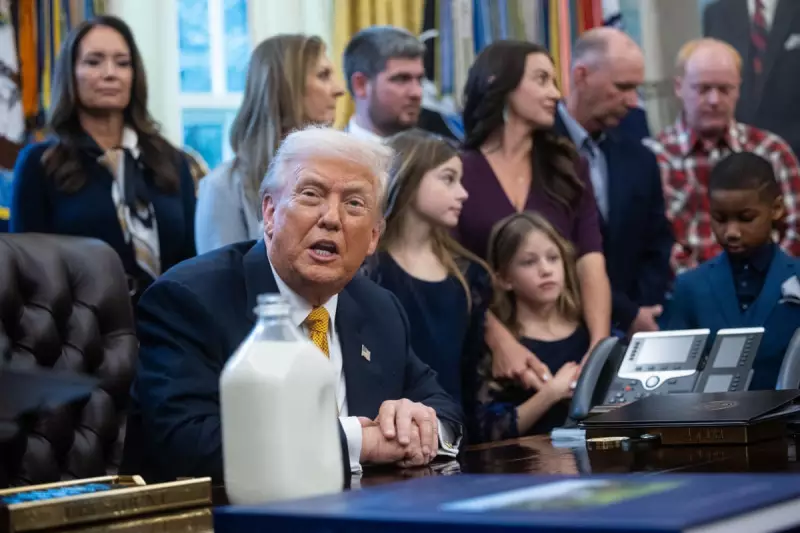
Former US President Donald Trump has thrown his weight behind a controversial legislative effort to bring whole milk back into American school cafeterias. The move marks a fresh political skirmish in the long-running battle over childhood nutrition standards.
The Bill and Its Backers
The proposed legislation, known as the Whole Milk for Healthy Kids Act of 2023, seeks to amend the Healthy, Hunger-Free Kids Act of 2010. That landmark act, championed by former First Lady Michelle Obama, restricted the fat content of milk served in schools to 1% or less, effectively banning whole and 2% milk. The new bill aims to reverse those restrictions.
Republican Congressman Glenn "GT" Thompson of Pennsylvania introduced the bill, arguing it gives schools and parents more choice. The proposal has garnered significant support from the dairy industry and farming communities. Trump's public endorsement, delivered at a rally, amplifies the bill's profile, framing it as a matter of both health and personal freedom.

Nutritional Debate Reignited
The push for whole milk challenges prevailing dietary guidelines. Proponents, including some nutritionists, argue that the fats in whole milk are more satiating and can help reduce consumption of sugary drinks. They also point to studies suggesting whole-fat dairy may not be linked to higher obesity rates in children.
However, critics, including many public health experts, warn that reintroducing higher-fat milk undermines efforts to combat childhood obesity and heart disease. They cite guidance from the American Heart Association and the Dietary Guidelines for Americans, which recommend low-fat or fat-free dairy for children over two. The debate pits emerging research on dairy fats against long-standing public health policy.
Political Symbolism and Consequences
Beyond nutrition, the whole milk bill has become a potent political symbol. For its supporters, it represents a rejection of what they see as federal overreach and "nanny-state" policies from the Obama era. Trump's alignment with the issue fits a broader pattern of criticising policies associated with his predecessors.
The bill's fate remains uncertain in a divided Congress. Even if passed, its implementation would face logistical hurdles and likely resistance from school districts adhering to current standards. Nevertheless, the controversy ensures that school meal programmes will remain a focal point in America's culture wars, with implications for farmers, the dairy industry, and the health of millions of children.
The discussion extends beyond the lunchroom, touching on themes of agricultural policy, scientific authority, and the role of government in shaping personal dietary choices. As the 2024 election cycle approaches, such symbolic issues are expected to feature prominently on the campaign trail.