Artemis II's Celestial Voyage Illuminates Humanity's Contradictions
This week presented humanity at its most contradictory. While NASA's Artemis II mission carried messages of hope and continuity across the cosmos, Earth simultaneously documented escalating conflicts and body counts. The profound question emerges: which path will humanity ultimately choose to fund, name, and become?
The Voice of History Echoes Through Space
Four astronauts slept approximately 19,000 miles from the lunar surface when a historic transmission reached their spacecraft. "Hello, Artemis II. This is Apollo astronaut Jim Lovell. Welcome to my old neighborhood," declared the recorded voice of the legendary commander who orbited the moon in 1968 and survived the harrowing Apollo 13 mission in 1970.
Lovell spent his remarkable 97-year lifetime waiting for humanity's return to the moon. Last August, he recorded this special message specifically for the Artemis II crew. On April 6th, mission control transmitted his words across the vast darkness of space.

Commander Reid Wiseman awakened to this transmission, listened intently, then presented a precious artifact to the camera: a square of silk bearing the original Apollo 8 mission patch that had traveled to the moon in 1968. Lovell's son had pressed this historic emblem into Wiseman's hands before launch.
"Good luck and Godspeed," Lovell's voice concluded, "from all of us here on the good Earth."
Contrasting Priorities: Exploration Versus Destruction
While NASA coordinates celestial wonders, humanity maintains grim terrestrial ledgers. From Iraq in 2006 emerges the haunting image of a military company's whiteboard displaying running tallies of confirmed kills with the chilling phrase "Let the bodies hit the floor" scrawled beneath.
Two decades later, Pentagon leadership stood before cameras promising Iran "death and destruction from the sky all day long" while declaring "No quarter, no mercy for our enemies" - language that legal scholars warn may constitute war crimes. This operation, named Epic Fury, supported a staggering $1.5 trillion defense budget with requests for an additional $200 billion specifically targeting Iran.
NASA's entire budget for sending human beings beyond Earth stands at $24.4 billion - essentially a rounding error compared to proposed defense expenditures. This financial disparity highlights society's conflicting priorities between exploration and destruction.
Moments of Cosmic Perspective
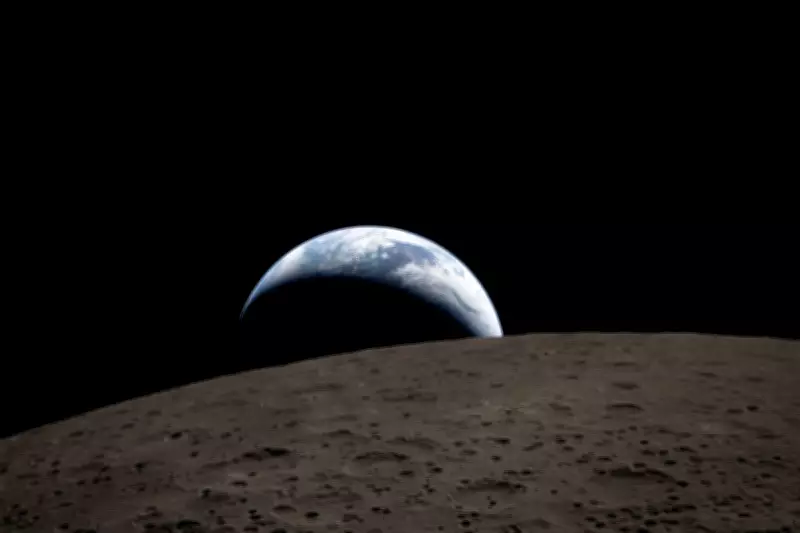
Astronaut Victor Glover, the first Black man to travel into deep space, floated to the spacecraft window observing our planet diminishing in scale. "In all of this emptiness - this whole bunch of nothing we call the universe - you have this oasis, this beautiful place where we get to exist together," he reflected.
Christina Koch, the first woman to travel around the moon, pressed her face against the glass beside him. Together they formed heart shapes with their hands as Earth burned blue and solitary behind the window. When asked to describe the mission in one word, she responded: "humility."
"We would never be here without so many people who came before us," Koch continued, "starting with Neil Armstrong, Katherine Johnson, civil rights movement leaders, everyone who worked on this spacecraft before us." Katherine Johnson, the brilliant mathematician whose calculations enabled Apollo missions, represents those whose contributions history initially overlooked.
Reid Wiseman watched the entire globe fill his window - Africa, Europe, the emerald northern lights curling at the edges. "It paused all four of us in our tracks," he reported.
Personal Tributes and Cosmic Connections
Jeremy Hansen, breaking the distance record that Jim Lovell's crippled Apollo 13 had held for 56 years, requested permission from mission control to name a lunar feature. "We lost a loved one," he explained, his voice breaking with emotion. "Her name was Carroll. The spouse of Reid, the mother of Katie and Ellie."
He indicated a bright spot on the lunar surface. "A bright spot on the Moon. We would like to call it Carroll." The crew embraced for an extended period following this emotional tribute. Now a bright lunar spot visible to Carroll's children bears her name - a memorial that will outlast all current human generations.

As Christina Koch crossed into the moon's gravitational pull at 12:37 AM, she radioed mission control: "We are now falling to the moon rather than rising away from Earth."
Cultural and Philosophical Dimensions
The Artemis mission carries profound cultural significance. While Apollo missions planted flags that have bleached white from 50 years of radiation exposure, Artemis represents the huntress - lunar, wild, sovereign - who protected untamed spaces and punished violations of sacred realms. In Chinese tradition, Chang'e stole immortality and fled to the moon where she reportedly resides still.
Jeremy Hansen carried the Seven Sacred Teachings of the Anishinaabe people on his mission patch: respect, love, courage, humility, honesty, wisdom, and truth. These teachings were created by Henry Guimond of Sagkeeng First Nation, who never imagined his work would travel such cosmic distances.
Carl Sagan's famous observation resonates powerfully: "We are made of star-stuff. We are a way for the cosmos to know itself." Humanity represents not mere observers or inheritors, but something stranger and more fragile - beings briefly, improbably awake.
The Ultimate Contradiction
Humanity demonstrates this awakening by beaming a dead commander's voice across the void, naming lunar craters for loved ones lost, and pressing faces against spacecraft glass to photograph everyone who has ever lived in a single frame. Yet simultaneously, terrestrial body counts continue climbing.
We maintain kill boards and star maps during the same weeks, as we always have. While conflicts persist below, the huntress proceeds regardless - carrying forward what remains of humanity that has not forgotten how to look upward toward wonder rather than downward toward destruction.