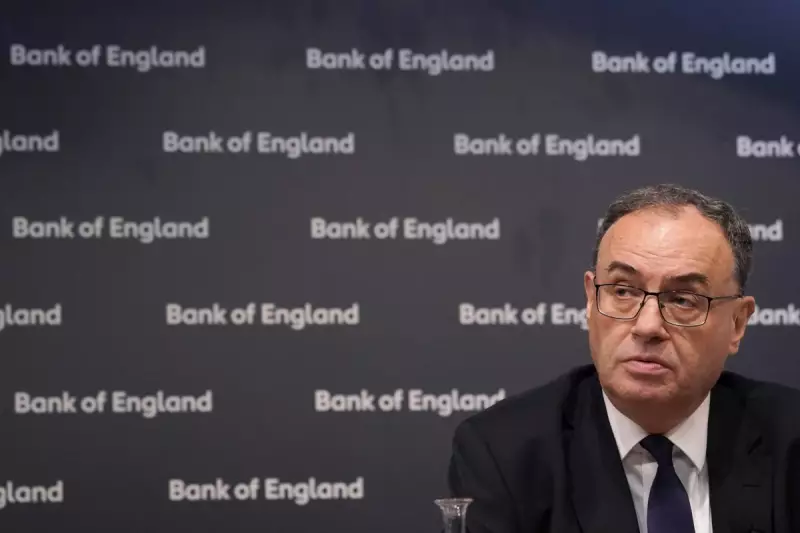
In a significant intervention, the Governor of the Bank of England, Andrew Bailey, has issued a stark warning to his peers, calling on central banks and international institutions to robustly challenge the rise of populism. Speaking in London on Friday 16 January 2026, Bailey argued that such bodies are increasingly portrayed as "unresponsive and acting for the benefit of the powerful" and must push back with actions, not just words.
A Call to Defend Multilateralism
Addressing economists and officials at the Bellagio Group event, Bailey delivered a stern rebuke against populist forces and the erection of barriers to international trade. "The rise of populism makes the task [of multilateral institutions] harder," he stated. He urged economic leaders to be both realistic and assertive in pursuing what he termed "robust openness," emphasising that now is not the time to retreat from global trade.
The Governor outlined four critical headwinds threatening global economic and social progress:

- Ageing populations, which suppress growth and increase fiscal pressures.
- The economic shocks linked to climate change.
- The fiscal consequences of increased defence spending.
- The growing restrictions on free trade.
Solidarity in a Tumultuous Week
Bailey's speech capped a week of high tension for central banks worldwide. It followed the revelation that the US Department of Justice under Donald Trump had launched an investigation into the Federal Reserve and its Chair, Jay Powell. Powell attributed the probe to the Fed's reluctance to cut interest rates more quickly.
This move triggered an unprecedented response. All of Powell's living predecessors, including Ben Bernanke, Janet Yellen, and Alan Greenspan, signed a statement with former Treasury secretaries condemning the investigation. They accused the Trump administration of acting like "emerging markets with weak institutions."
Furthermore, in a powerful show of unity, some 11 central banking chiefs, including Andrew Bailey, issued a joint declaration of "full solidarity" with Powell and the principle of central bank independence. While Bailey's published speech did not explicitly mention the DoJ probe, his signature on this statement underscored his commitment to the cause.
The High Cost of Eroding Trust
Central to Bailey's argument was a warning about the corrosive effect of declining public trust. He cautioned that the erosion of faith in institutions like the Bank of England would directly harm prosperity and fuel instability.
"[We must] recognise the importance of, and invest in the broadest sense, in the multilateral institutions," Bailey urged. He acknowledged that reforms are sometimes necessary but stressed that "a world without effective institutions is unlikely to be stable."
Concluding his remarks, Bailey returned to the theme of open economies, admitting that defining shared interests in a world of rising geopolitical tension "has been hard." Nonetheless, he positioned the defence of these principles and the institutions that uphold them as a non-negotiable pillar for future stability and growth.