The 72nd annual meeting of the secretive Bilderberg group concluded this weekend at the luxurious Salamander hotel in Washington DC, shrouded in its customary veil of confidentiality and surrounded by tight security measures. This elite policy conference, which has fueled conspiracy theories since its inception in the 1950s, assembled an impressive roster of prime ministers, military commanders, technology billionaires, and chief executives from major investment firms, all operating away from public scrutiny.
A Gathering Amid Global Uncertainty
This year's Bilderberg conference occurred during a period of significant crisis and uncertainty for the NATO alliance, which the group has historically served as an intellectual foundation. Recent weeks have seen former President Donald Trump repeatedly threaten to withdraw from what he dismissively calls NATO's "paper tiger" status, creating severe strain on trans-Atlantic defense relationships. The agenda specifically highlighted discussions about the "Trans-Atlantic Defence-Industrial Relationship," reflecting the urgent need to address these mounting tensions.
American Presence and Political Connections
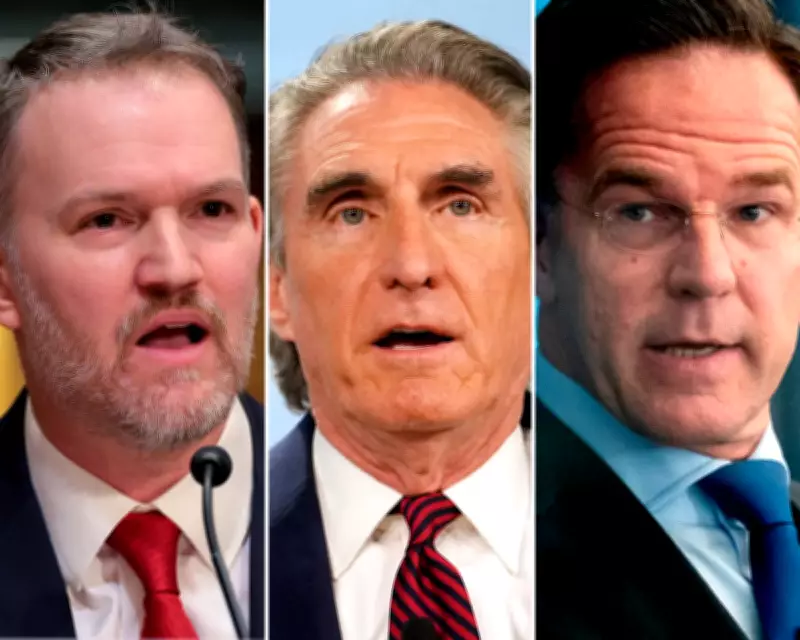
Despite Trump's rhetoric about abandoning NATO, American participation in Bilderberg remained robust and influential. NATO Secretary General and frequent Bilderberg attendee Mark Rutte arrived directly from what he described as a "very frank" discussion at the White House. The American delegation featured prominent Trump allies including Interior Secretary Doug Burgum, trade advisor Robert Lighthizer, House Ways and Means Committee Chair Jason Smith, and Army Secretary Dan Driscoll, known informally as Trump's "drone specialist."

Wall Street powerhouses were equally represented, with chief executives from KKR, Lazard, and pharmaceutical giant Pfizer engaging in private discussions with senior political figures close to the presidential administration. This discreet blending of corporate interests with governmental authority aligns perfectly with Trump's approach to crony capitalism, making Bilderberg's behind-the-scenes lobbying particularly significant.
Military Focus and Technological Warfare
With escalating conflict in Iran dominating international headlines, this year's conference adopted a distinctly wartime atmosphere. The agenda included sessions on the "Future of Warfare," attracting military leaders such as Admiral Samuel Paparo, commander of the US Indo-Pacific Command. Private sector representation featured numerous defense contractors and drone manufacturers, led by former Google CEO and Bilderberg insider Eric Schmidt, who has become an outspoken advocate for unmanned combat systems.
Schmidt recently told the Financial Times that "future wars are going to be defined by unmanned weapons" utilizing "swarms of drones operated remotely and increasingly automated with AI targeting." Companies thriving at this intersection of artificial intelligence and military technology, including Anduril Industries and Palantir, sent their leadership to the Washington gathering. Anduril CEO Brian Schimpf and Palantir chief Alex Karp, who collaborates with Schimpf on Trump's "Golden Dome" initiative, both participated in the confidential discussions.
Notable Absences and Intelligence Connections
Remarkably absent from this year's participant list was billionaire investor Peter Thiel, who has served on Bilderberg's steering committee since 2008 and had never previously missed a conference. Thiel's influence extends deeply into both the Trump administration and the Bilderberg network, where he helps fund the lavish Washington meetings through the American Friends of Bilderberg organization alongside fellow steering committee member Eric Schmidt.
Thiel operates within the shadowy realm where high finance intersects with intelligence operations, having established Palantir with initial funding from the Central Intelligence Agency. This ambiguous territory mirrors Bilderberg's own origins, as the group was originally founded through collaboration between British and American intelligence agencies. The conference traditionally includes several intelligence directors, with this year's attendees featuring MI6 head Blaise Metreweli among three senior spy chiefs present.

Media Silence and Geopolitical Signaling
The persistent mystery surrounding Bilderberg concerns why mainstream media outlets consistently fail to cover such a significant annual summit featuring numerous high-ranking political figures. This year's conference included particularly newsworthy elements, most notably the participation of Vivian Motzfeldt, former foreign minister and parliamentary speaker of Greenland.
Motzfeldt made history as the first Greenlander to attend Bilderberg, sending a clear message to the Trump administration that Greenland maintains powerful allies within the trans-Atlantic partnership. She likely contributed to discussions about "Arctic Security," potentially referencing Trump's recent inflammatory statement about "GREENLAND, THAT BIG, POORLY RUN, PIECE OF ICE!!!" However, without any journalistic oversight of the closed-door proceedings, the substance of these conversations remains unknown to the public.
The absence of press access means the strategic planning, talent identification, and major ideological debates about topics like "China" and "the West" that characterize Bilderberg conferences remain hidden from public view. For influential networkers like Peter Thiel, missing such opportunities for informal access to world leaders—from breakfast with Finland's president to cocktails with the King of the Netherlands—represents a significant departure from normal practice, raising questions about shifting power dynamics within this exclusive global forum.