Cesar Chavez Legacy Confronts Multiple Rape Allegations in Explosive Report
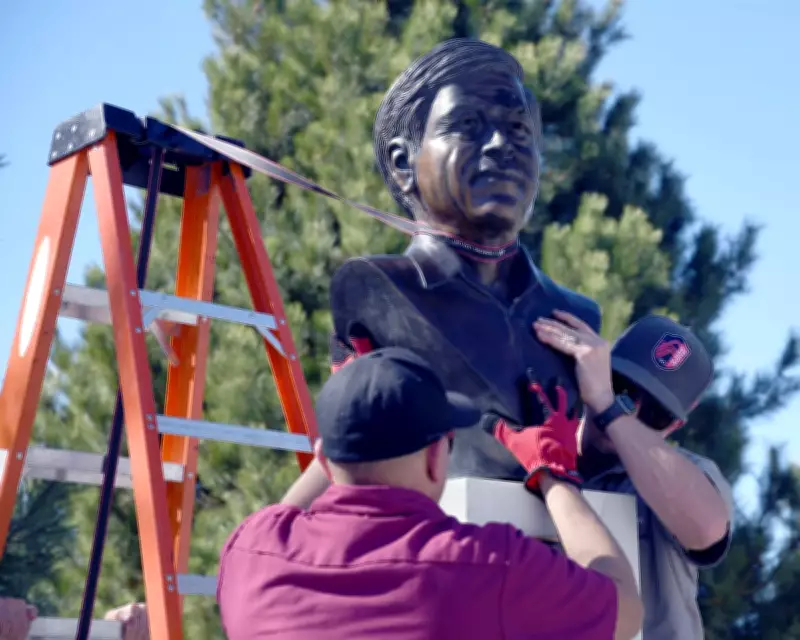
The removal of a bust of Cesar Chavez from Denver's César E Chávez Park on March 19th symbolizes a profound shift in how America views the legendary farmworker organizer. A comprehensive New York Times investigation has revealed multiple allegations of sexual harassment, assault, and rape against Chavez, fundamentally challenging his status as a civil rights icon.
Detailed Allegations Spanning Decades
According to the Times report, five women have come forward with detailed accounts of sexual misconduct by Chavez, who died in 1993. The allegations include child sexual abuse, rape, and systematic harassment within the United Farm Workers movement he helped found.
Two women, Ana Murguia and Debra Rojas, both now 66, allege Chavez began molesting them when they were just 12 and 13 years old. As daughters of UFW organizers, they had been raised to revere Chavez as a hero before being summoned to his office for what became years of sexual abuse.

"He did his grooming very well," Rojas told the Times. "He should get an Academy Award for all he did."
Pattern of Predatory Behavior
The investigation reveals remarkably similar patterns in Chavez's alleged conduct:
- Rojas describes being raped at age 15 during a UFW march in Stockton, California
- Murguia says Chavez's sexual abuse of her continued for several years during her childhood
- Both women trace subsequent mental health struggles to their childhood trauma
Perhaps most disturbingly, the Times reviewed a letter Rojas sent to Chavez in 1974 when she was just 13. Written on children's stationery in a bubbly, girlish hand, the letter alternates between childhood updates and bashful allusions to their abusive relationship, demonstrating what Rojas calls Chavez's expert grooming techniques.
Dolores Huerta's Harrowing Account
The report also contains newly public allegations from Dolores Huerta, the renowned trade union activist and UFW co-founder. Huerta, who will turn 96 in April, alleges that Chavez pressured her to have sex on a work trip and later raped her in a parked car.
These nonconsensual encounters led to pregnancies that Huerta strove to conceal before giving the resulting daughters away to be raised by others. Huerta described her longtime reluctance to come forward as a mixture of shock and fear of alienation and disbelief.
Systemic Protection of Chavez's Legacy
The investigation suggests that those close to Chavez or who value the UFW legacy have long discouraged victims from speaking out. When Rojas posted about her abuse in a private Facebook group more than a decade ago, some accused her of jeopardizing the movement's accomplishments.
"It was in fact Chavez who endangered those accomplishments," the report emphasizes. "Chavez who discredited his own legacy; and Chavez who should be considered responsible for tarnishing the reputation of the union."
Reckoning with a Complicated Legacy
The breadth and consistency of these accounts suggest a long-term pattern of sexual misconduct by Chavez, raising the possibility that other accusers may come forward. The revelations force a difficult reckoning with how America memorializes complex historical figures.
Across California, boulevards and elementary schools named for Chavez now carry different meaning. Public murals honoring him and the California state holiday bearing his name must be reconsidered in light of these allegations.
Separating the Movement from the Man
Despite these devastating revelations about Chavez's personal conduct, the report emphasizes that the righteousness of the farmworker struggle persists. The movement for workers' dignity, Latino rights, and greater freedom for poor people remains valid and necessary.
Huerta's own journey reflects this complexity. After her rape by Chavez, she came to embrace feminist politics despite initially considering feminism a middle-class phenomenon. Her evolution suggests a path forward for movements grappling with leaders who fail to live up to their own principles.

As the UFW and broader labor movement confront this new understanding of Chavez's conduct, they face the challenging task of honoring the struggle while discarding the cult of personality that protected a predator.