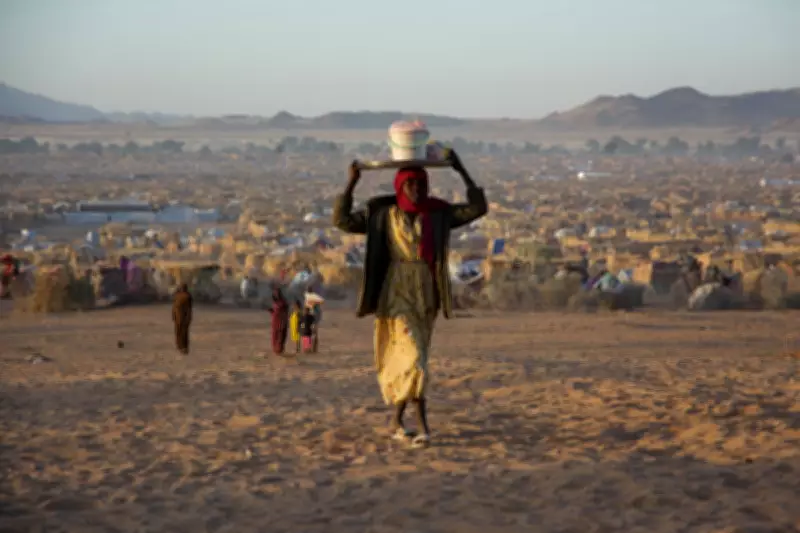
Darfur's Despair: Hunger, Bribery, and Ruin After Three Years of Sudan's Civil War
As Sudan's civil war enters its fourth year, the humanitarian catastrophe in Darfur deepens, with photojournalist Jérome Tubiana documenting the harrowing daily existence of approximately 600,000 displaced people gathered in the town of Tawila, North Darfur. These individuals, many survivors of recent massacres, have converged to call for an end to the bloodshed, coinciding with Berlin talks marking the war's third anniversary. Sudan remains the world's largest displacement crisis, with about 11 million people displaced: 7 million internally and 3.5 million as refugees in neighboring countries.
The Tawila Displacement Camp: A Refuge Amid Ruin
The town of Tawila now hosts at least 600,000 homeless, displaced people, most fleeing from El Fasher, about 30 miles to the east. Among them are survivors of a two-day massacre in October and others who escaped during the city's siege by the Rapid Support Forces (RSF) paramilitaries, who are fighting their former backers, the regular Sudan Armed Forces (SAF). Daily life is marked by desperation, as people undertake perilous trips back to war-ruined El Fasher to salvage belongings, involving complex payments to RSF fighters and checks by the neutral rebel group, the Sudan Liberation Army (SLA), which controls Tawila.
Struggles for Survival and Heritage Loss
Vehicles laden with reclaimed belongings from El Fasher arrive at Tawila's northern gate, where SLA soldiers inspect goods to prevent looting, though theft remains widespread. New arrivals swell camps like Shakshako, while in El Fasher, residents dug foxholes at sites like the Amna Binti Wahab school for protection from shelling, now used as gathering points for remaining families. The wars have devastated cultural heritage, including the 18th-century mosque and Quranic school of Sultan Teirab, damaged in previous conflicts, erasing testaments to Darfur's rich sultanate history.

Humanitarian Crisis: Injuries and Malnutrition
Hundreds from El Fasher suffer severe injuries from bullets, shelling, and drone bombings, treated in makeshift clinics or at Tawila's military hospital operated by the SLA. In the month after El Fasher's fall, 1,400 patients received emergency care in Tawila for violence-related injuries, with over 400 surgical procedures. Malnutrition is rampant, with Médecins Sans Frontières screening revealing 63% of children under five malnourished (30% severely) and 50% of adults in similar condition at the Gerne nutrition centre.
Bribery and Trade in a War-Torn Landscape
At exchange points like Khor Luey, people pay taxes to RSF drivers to reclaim their own belongings, highlighting systemic bribery. Meanwhile, in North Darfur's Ain Siro mountains, trade alliances persist at peace markets where Arab herders, some in RSF uniforms, sell livestock under the security of non-Arab groups. Rebel factions, including the SLA-Transitional Council allied with RSF, control areas to facilitate farming and trade, avoiding direct combat in no man's lands between conflicting zones.
Attacks on Healthcare and Displacement Realities
Healthcare facilities are not spared, with Kutum hospital bombed by SAF, destroying obstetrics services. Over three years, UN reports 213 attacks on health facilities by both sides, killing over 2,000 people, with Sudan accounting for 82% of global deaths from such attacks in 2025. Displacement camps, like those in Tawila, see children flying kites amidst the chaos, a stark contrast to the surrounding ruin and hunger that define life for millions caught in Sudan's enduring conflict.