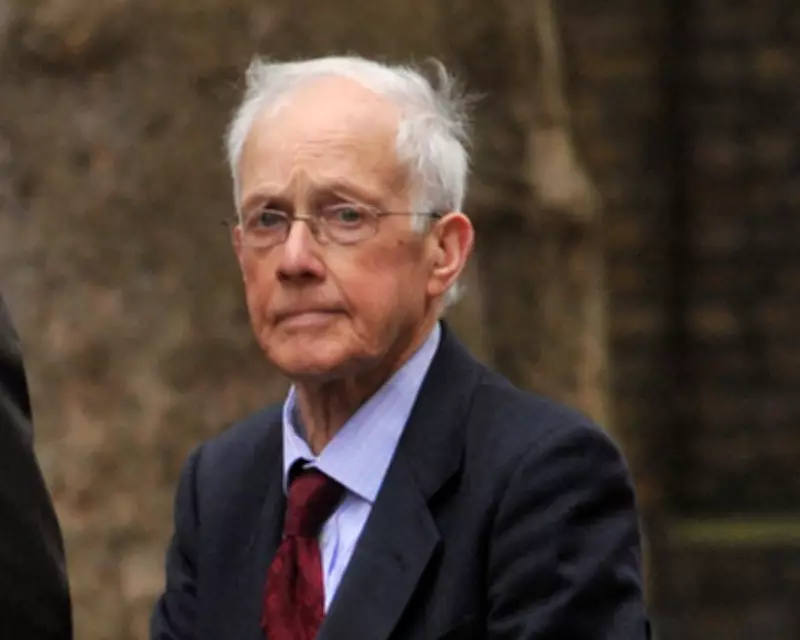
David Winnick: A Legacy of Civil Liberties and Parliamentary Courage
David Winnick, a Labour Member of Parliament for 42 years, passed away at the age of 92. Throughout his career, he was a steadfast advocate for progressive causes, including free television licences for the elderly and a national minimum wage, long before these ideas were adopted as government policy. His most notable achievement was his successful opposition to the Blair government's proposal to detain terrorist suspects for up to 90 days without charge, a stance that showcased his unwavering commitment to civil liberties.
Defying the Government on Detention Powers
In 2005, Winnick led a charge in the House of Commons against the Labour government's plan to extend detention periods for terrorist suspects to 90 days. Despite having supported the invasion of Iraq in 2003, he took a firm stand on civil liberties grounds, arguing that such measures were excessive. His amendment limited the detention term to 28 days, resulting in the first parliamentary defeat for the Labour government in nine years. He continued his opposition during the Brown administration, challenging a subsequent attempt to hold suspects for 42 days.
A Complex Political Stance
Winnick's positions were not always aligned with his leftist colleagues. He supported British interventions in Kuwait and Bosnia, believing it was necessary to act against tyrants when the United Nations failed to do so. This led to praise from Conservative figures like Douglas Hurd, who acknowledged Winnick's commitment to international order. However, his views also caused friction within the Labour Party, highlighting his independence and conviction-driven approach.

Early Life and Political Journey
Born in Brighton in 1933 to a Jewish family, Winnick's childhood was disrupted by wartime evacuation to Northamptonshire. He later earned a diploma in social administration from the London School of Economics and developed a passion for reading at Brighton Public Library. After national service, he worked as a clerk and became active in trade unions, joining the Labour Party in 1957. He served as a local councillor in Willesden and Brent before entering Parliament.
Parliamentary Career and Constituency Work
Winnick first won a seat in Croydon South in 1966 but lost it in 1970. He returned to Parliament in 1979, representing Walsall North for 38 years. His constituency was an industrial area in the Black Country that was never entirely safe for Labour, yet he held it through eight general elections with narrow majorities. Known for his diligent service, he focused on committee work, particularly on home affairs and parliamentary procedures.
Later Years and Legacy
In 2009, Winnick spoke out against the parliamentary expenses scandal, criticizing then-Speaker Michael Martin for failing to address administrative failures. He was defeated in Walsall North in the 2017 general election, a loss he attributed to local factors in a Brexit-voting area. Despite this, his long service was praised by his political opponents. Winnick was married to Bengi Rona from 1968 until their divorce in 1983 and is survived by a son.
David Winnick's career exemplifies a politician driven by principle rather than ambition. His advocacy for civil liberties, social justice, and parliamentary integrity leaves a lasting impact on British politics, reminding us of the importance of standing firm in the face of governmental overreach.