Muslim Leaders Condemn Farage's Call to Ban Public Prayer as Bigoted
Muslim leaders and political figures have strongly condemned Nigel Farage's recent call to ban public prayer by Muslims in the United Kingdom, labeling his remarks as bigoted and warning of a "growing tide of hate" against the Muslim community. The controversy erupted after the Reform UK leader made comments following a peaceful Eid prayer event held in London's iconic Trafalgar Square earlier this week.
Farage's Remarks Spark Outrage
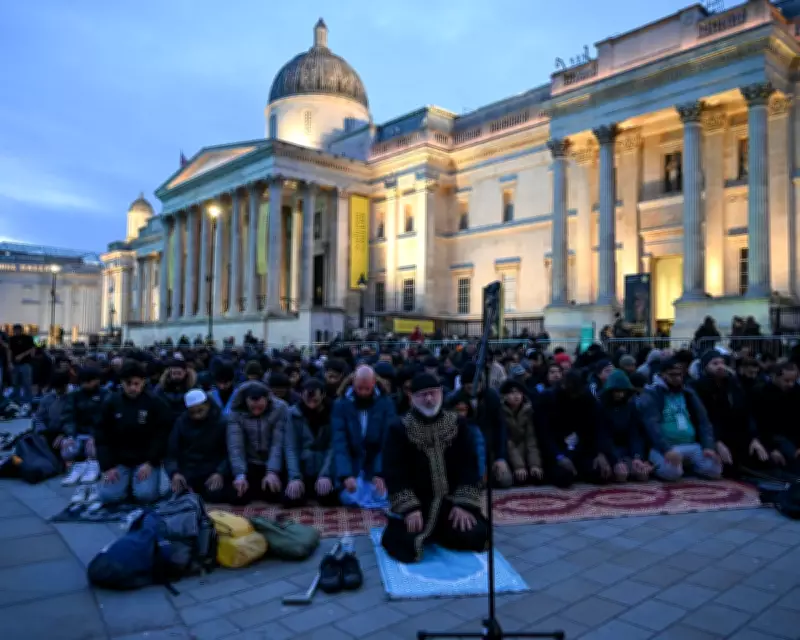
Nigel Farage made his controversial statements during the launch of Reform UK's manifesto for the upcoming Scottish parliament elections. He described the Trafalgar Square event, organized by the Ramadan Tent Project and attended by London Mayor Sadiq Khan, as "an open, deliberate, wilful attempt, not at the private observance of a different religion, but the attempt to overtake, intimidate and dominate our way of life."
When asked by reporters if he would support banning such events in the future, Farage responded: "We wouldn't want to stop individuals praying but mass prayer is banned in many Muslim countries in the Middle East itself. So, yes, we have to stop this kind of mass demonstration, provocative demonstration, in historic British sites."

Political Figures Voice Strong Opposition
Humza Yousaf, the UK's first Muslim first minister and SNP MSP, delivered a scathing rebuke: "Nigel Farage seems to have no issues with Christian prayer, Hannukah, Vaisakhi or Diwali all being celebrated in Trafalgar Square. He only has a problem with Muslims praying. There is a word for that, bigotry."
Yousaf added that while he expected such rhetoric from Farage, he was "angry and disappointed" that similar sentiments were being mainstreamed by Conservative figures like Nick Timothy MP.
Scottish Labour leader Anas Sarwar characterized Farage's remarks as exemplifying "toxic, poisonous politics" and described the Reform UK leader as "a cynical chancer who wants to divide us."
Conservative Response and Cultural Debate
Conservative leader Kemi Badenoch entered the debate by questioning whether such public prayer events fit "within the norms of British culture." She defended her shadow justice secretary, Nick Timothy, who had claimed that Islamic prayers in public spaces were intimidating and unBritish.
Badenoch stated: "This debate which Nick is having is not about freedom of religion. It is about how religion is expressed in a shared public space, and whether those expressions fit within the norms of a British culture."
Labour responded by accusing the Conservatives of embracing "gutter politics" of prejudice.
Muslim Community Leaders Express Concern
Shaista Gohir, a crossbench peer and leader of the Muslim Women's Network UK, questioned the motivation behind calls for bans: "When these gatherings are conducted responsibly – without obstructing roads, causing disruption, and with proper safety measures – why then do some politicians seek to ban them? The answer is simple: they object to the sight of them. This reflects a deep-seated hatred toward Muslims."
Akeela Ahmed, chief executive of the British Muslim Trust, issued a warning: "British Muslims must not become a political football. Words have consequences – and those who genuinely believe in the British values of tolerance, equality under the law and freedom of religion must not allow those values to be cast aside in attempt to marginalise British Muslims."
Event Background and Political Context
The Trafalgar Square event, organized by the Ramadan Tent Project, has now been held six times without previous incident or controversy. The gathering brings together hundreds of Muslims and people of other faiths for prayer before the celebration of Eid.
Farage made his remarks to approximately 500 supporters at a country club near Glasgow, where he appeared alongside Reform UK's Scotland leader Malcolm Offord. They were introducing candidates for the Holyrood elections in May, where Reform UK plans to stand candidates in all seats.

The party's manifesto pledges to "make Scotland the most successful part of the UK" and includes controversial proposals to scrap Scotland's six-band income tax system and eliminate all SNP government net zero targets, subsidies, and related organizations.
Recent opinion polls show Reform UK running neck and neck with or ahead of Scottish Labour in some surveys, though a Thursday Ipsos Scottish Political Pulse survey suggested their popularity might be slipping.