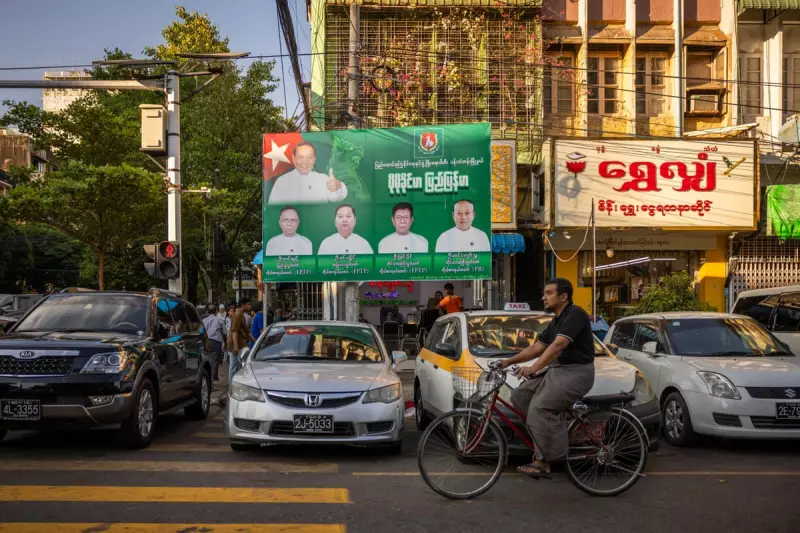
On the surface, the streets of downtown Yangon present a picture of bustling normality. Commuters weave past roadside vendors, diners sit beneath parasols, and the city's famous Sule Pagoda gleams at sunset. Yet this veneer of everyday life masks a profound and pervasive anxiety, as Myanmar's military rulers conduct what the United Nations and Western governments have labelled a "sham" election.
A City Living in Fear
Almost five years after the military seized power in a coup on 1 February 2021, ousting and imprisoning de facto leader Aung San Suu Kyi, the atmosphere in the country's largest city is one of palpable tension. "We are always living in fear," one commuter confided, speaking briefly and anonymously. "Before the coup, we had such hope for the future. We were not at all afraid of our government. Now all that has changed."
The junta has touted the multi-phase vote, which began in late December and is set to continue until 25 January, as a return to democracy. However, with Aung San Suu Kyi's National League for Democracy banned and the 80-year-old leader still in prison, critics see it as a cynical attempt to legitimise military rule. The streets that were once packed with hundreds of thousands of pro-democracy protesters are now silent at night, with many residents terrified of being snatched by the authorities.

Economic Collapse and Silent Resistance
The economic toll of the coup and ensuing conflict has been devastating. According to UN figures, Myanmar's gross domestic product has contracted by 9% since 2020, reversing a decade of progress. The local currency, the kyat, has collapsed, losing 80% of its value and driving rampant inflation. Foreign businesses and tourists have largely vanished.
An online influencer using the pseudonym Hnin Sandar described a city psychologically imprisoned. "My friends remind me, don't talk about politics even in a taxi or on the bus because they are listening," she said. "I feel like I'm living in jail." This climate of fear extends to the polling stations. While the junta reported a 52% turnout on the first Sunday of voting—compared to roughly 70% in the 2015 and 2020 elections—many participated out of coercion, fearing punishment or conscription if they did not.
A Nation Divided by War
Yangon remains detached from the fierce civil war raging across roughly two-thirds of the country, where daily military air and drone strikes are commonplace. The conflict prompted the junta to enact mandatory conscription in 2024 after losing vast territories to anti-coup resistance groups, sparking an exodus of young men who could afford to flee.
For those who remain, life is a struggle for survival. Ei*, a garment factory worker from conflict-ravaged Rakhine state, embodies this hardship. She hasn't seen her family in seven years and has stopped working overtime because it's too unsafe to travel home late. "I wish at least for just one week I could escape everything, and not have to think or worry about anything," she said. "I don't want to hear bad news any more."
As one young man, a former protester, observed while watching the sunset, the election is a performance for the world. "They pretend, they want to show the world that they made an election, that they go back to democracy, but we all know the result," he stated. "There is no competitor." Like many in Yangon, he did not vote, a quiet act of defiance in a city where hope has been supplanted by fear, and the dream of democracy feels increasingly distant.