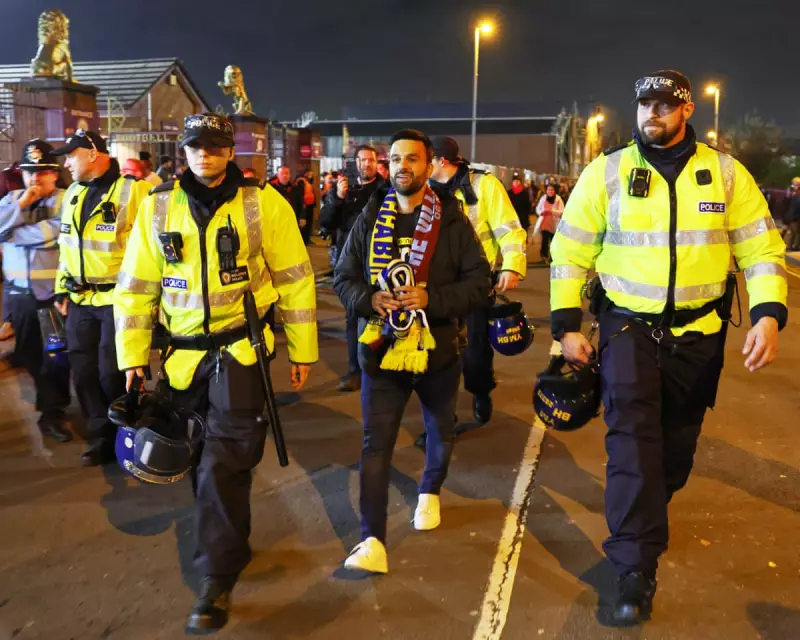
A damning independent review has exposed serious failings in the decision by West Midlands police to ban fans of Israeli football club Maccabi Tel Aviv from attending a match at Aston Villa's Villa Park last November.
A Decision Based on Exaggerated Claims
The force had justified the highly sensitive ban by citing a violent incident in the Netherlands. They claimed more than 5,000 Dutch police officers were deployed to contain hundreds of Israeli fans who embarked on a rampage, tearing down Palestinian flags and assaulting Muslim taxi drivers.
However, the review by Chief Inspector of Constabulary Andy Cooke concluded this week that this account was largely incorrect. Dutch authorities told inspectors they deployed around 1,200 officers, had reports concerning only one flag and one taxi driver, and that a Maccabi fan was thrown into a canal, seemingly by a pro-Palestinian group.

Worse still, the police case included references, apparently sourced from an unreliable AI tool, to a football match that never actually took place.
Inflaming Tensions and Undermining Trust
The review found that by publicly downplaying intelligence about local plots to attack the visiting Israeli supporters, the force overstated the threat posed by the fans and understated the danger to them. Home Secretary Shabana Mahmood, the Muslim MP for Birmingham, stated the attempt to smooth community relations had backfired badly.
The fallout has ignited a toxic row over accusations of "two-tier policing." This has reactivated incendiary claims from the right that police are soft on Muslim communities, alongside counter-complaints that the opposite is true. The situation has left both British Jews and British Muslims feeling less safe in a febrile climate.
Jonathan Hall KC, the independent reviewer of terrorism legislation, pointedly asked why police did not pursue the alleged would-be attackers instead of effectively telling the potential victims of racially aggravated crime to stay home.
Broader Fears and the Path Forward
For many in the British Jewish community, the episode stirs deep-seated fears of being seen not as a protected minority but as a problem to be managed. The incident resonates with a wider pattern, illustrated by the case of Labour MP Damien Egan, who reportedly cancelled a school visit in his Bristol constituency due to a threatened protest over his links to Israel.
The school has since rescheduled the visit, and a snap Ofsted inspection will investigate claims staff worked to keep the MP out. The broader lesson, however, is that frontline professionals must be able to trust impartial police advice when navigating such political flashpoints—a trust severely damaged in the West Midlands.
As the review becomes a resigning matter for some, the episode serves as a stark warning. Handled poorly, such situations play directly into the hands of extremists who peddle the lie that Jews and Muslims cannot coexist. Upholding a multicultural society requires accurate policing, empathy, and a shared commitment to tolerance, especially when it is most difficult.