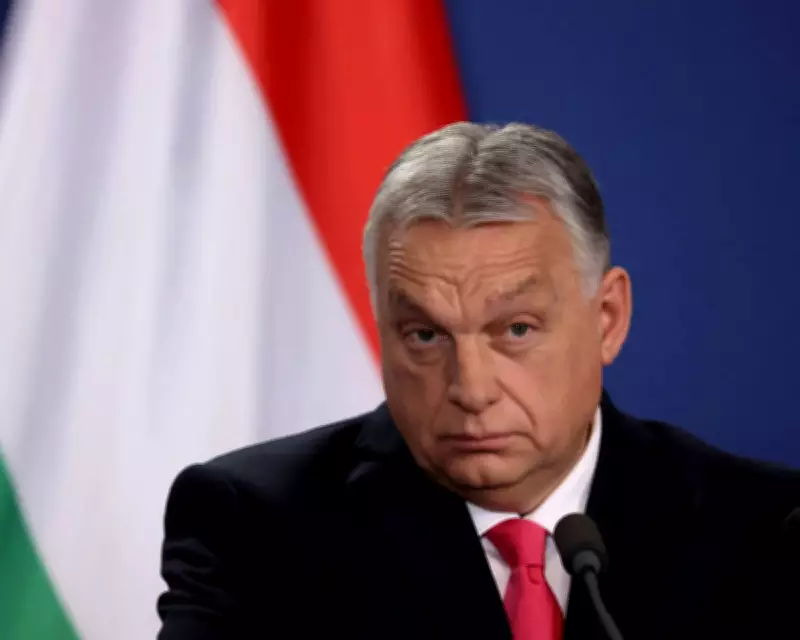
Hungary's Political Landscape at a Critical Juncture
After 16 consecutive years in power, Hungarian Prime Minister Viktor Orbán is confronting his most significant electoral threat to date. The emergence of opposition figure Péter Magyar and the Tisza party has transformed the political arena, setting the stage for a highly competitive parliamentary election on April 12. Recent surveys indicate that nearly half of Hungarians express a desire for governmental change, reflecting widespread discontent with Orbán's prolonged tenure.
Economic Stagnation and Public Dissatisfaction
Hungary's economic performance has notably deteriorated over the past decade and a half, shifting from one of Central and Eastern Europe's strongest economies to one of its weakest. Despite repeated assurances of an economic resurgence, stagnation persists, exacerbating public frustration. Policy Solutions research underscores that voters are acutely aware of neglected public services, including healthcare and transportation systems. While the cost of living crisis affects many nations, Hungarians feel particularly let down, having been promised exceptional outcomes under Orbán's governance model.
The Opposition's Unified Front
The Tisza party has successfully consolidated a previously fragmented opposition, turning the upcoming election into a genuine contest. However, a critical tension exists: while dissatisfaction with the status quo is high, many voters remain skeptical about the feasibility of political change. This uncertainty creates a volatile electoral environment where frustration may not suffice to overcome fears of the unknown.

Orbán's Strategic Leverage: International Alliances
Orbán possesses a unique advantage that his rival cannot match: strong international backing, particularly from Washington. Amid Donald Trump's tumultuous second term, Orbán has gained renewed momentum. His campaign narrative emphasizes his ability to maintain favorable relations with global leaders from the United States, Russia, and China, positioning himself as Hungary's indispensable negotiator in a world dominated by strongmen.
Expect Trump's influence to feature prominently in Orbán's messaging, reinforced by recent events such as Orbán's White House visit and Marco Rubio's scheduled trip to Budapest. These interactions are portrayed as evidence of Orbán's global relevance and diplomatic prowess.
Campaign Tactics: Fear vs. Hope
Fidesz, Orbán's party, has shifted its strategy from touting governance achievements to warning voters of potential risks. The party's slogan, "The safe choice," targets an anxious electorate grappling with war in Europe, migration concerns, and cultural conflicts. Orbán frames issues like European military support for Ukraine, migration, and LGBTQ+ rights as part of a dangerous "Brussels path," contrasting them with a "Hungarian path" centered on peace, migration control, and traditional values.
This narrative aligns with Trump's skepticism toward Ukraine and criticism of European liberal democracy, emboldening Orbán to adopt a softer stance on Russia and a harsher one on Ukraine. He argues that global power dynamics validate his position, leveraging international instability to bolster his relevance.
Contrasting Visions for Hungary's Future
Two distinct strategies define this election. Orbán's approach is rooted in the international sphere, emphasizing his ability to navigate a perilous world order where personal relationships and bilateral deals outweigh multilateral agreements. In contrast, Magyar grounds his campaign in domestic realities, highlighting everyday struggles such as the cost of living, failing public services, and governmental underperformance.
Structural Advantages and Electoral Hurdles
Despite Tisza leading in independent and opposition-leaning polls, Orbán retains a credible path to victory due to structural biases in Hungary's electoral system. Designed by Fidesz in 2010, the system features constituency maps that favor the governing party, with Fidesz-leaning districts typically smaller than those supporting the opposition. To secure a parliamentary majority, Tisza would likely need a national lead of at least five percentage points, a challenging feat on an uneven playing field.

The Stakes and Uncertainty Ahead
Tisza's greatest opportunity lies in persuading disillusioned voters that it offers a credible alternative with tangible improvements to daily life. Orbán aims to convince the electorate that change itself is the ultimate danger, while Magyar argues that stagnation poses the real threat. For the first time in 16 years, the election outcome is genuinely uncertain, marking a profound departure from Hungary's political history and setting the stage for a pivotal decision that will shape the nation's trajectory.