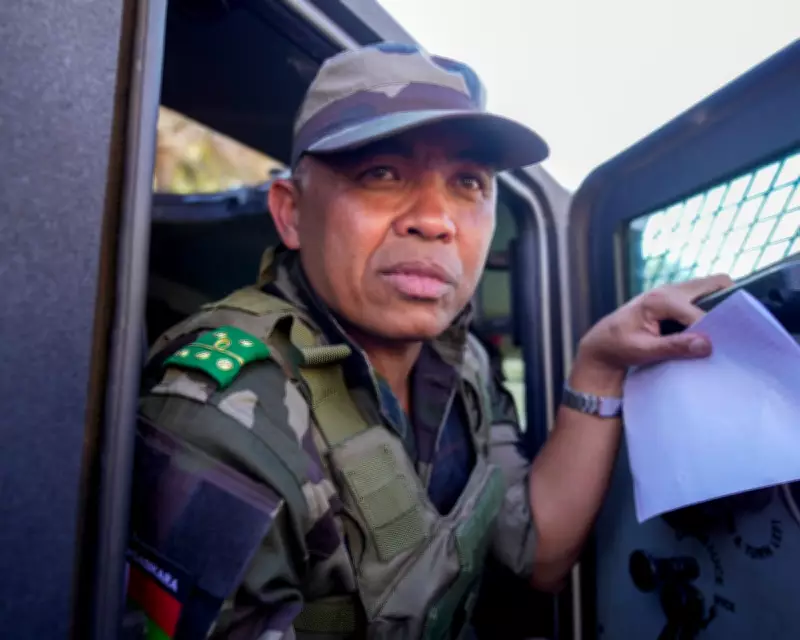
Madagascar's military president Michael Randrianirina has issued a controversial decree requiring all prospective ministers to undergo and pass lie detector tests as part of a sweeping anti-corruption initiative. This unprecedented measure comes just weeks after Randrianirina summarily dismissed the prime minister and entire cabinet without providing any public explanation for the dramatic governmental shakeup.
Unprecedented Screening Process for Government Positions
In a statement to local media outlets, President Randrianirina declared, "We have decided to implement polygraph testing as a mandatory component of our background integrity checks for all ministerial candidates." The military leader, who assumed power following a coup in October, emphasized that this rigorous screening process would help identify corrupt individuals while selecting officials committed to genuine reform.
Randrianirina elaborated on his expectations, stating, "We're not searching for candidates who are completely flawless, but we require individuals who demonstrate at least sixty percent integrity. This standard will enable Madagascar to finally pursue meaningful development." The president confirmed that a new cabinet would be formally announced early next week, following completion of the polygraph screening process.

Youth-Led Protests and Political Transition
The current political situation in Madagascar stems from widespread youth-led protests that began in September of last year. Initially organized in response to severe water and power shortages, the demonstrations quickly evolved into demands for comprehensive political system overhaul. Tragically, at least twenty-two people lost their lives during the initial days of these protests, according to United Nations documentation.
In October, the elite military unit Capsat, where Randrianirina previously served as colonel, publicly aligned with the protesters. The following day, then-President Andry Rajoelina reportedly fled the country aboard a French military aircraft bound for Dubai. Randrianirina was subsequently sworn in as interim president and has pledged to conduct national elections by late 2027.
Mixed Reactions to Polygraph Policy
Gen Z activists, who played a crucial role in the protests under the banner "Gen Z Madagascar," have expressed both support and skepticism regarding the new administration's approach. While generally supportive of removing previous government officials, some activists question the effectiveness of polygraph testing for ministerial screening.
One social media manager for the Gen Z Madagascar movement commented, "Polygraph technology lacks scientific validation for such applications. This approach seems more theatrical than substantive." However, the same individual acknowledged, "We recognize the previous ministers' shortcomings and maintain hope for improved governance, though we continue to monitor appointments for connections to the former regime."
Recent Governmental Changes and Economic Context
On March 9th, President Randrianirina dismissed the entire cabinet and prime minister. Subsequently, on Sunday, he announced the appointment of Mamitiana Rajaonarison, previously serving as anti-corruption chief, as the new prime minister. Both Randrianirina and Rajaonarison will personally interview only those ministerial candidates who successfully pass the mandatory polygraph examinations.
Madagascar remains one of the world's most economically challenged nations, with a per capita GDP of merely $545 according to 2024 World Bank statistics. Despite abundant natural resources including vanilla and precious gemstones, the country continues to struggle with systemic corruption, ranking 148th out of 180 nations in Transparency International's 2025 Corruption Perceptions Index. Anti-corruption advocates have long argued that these valuable resources have been systematically exploited by corrupt officials and business interests.
The international community continues to monitor Madagascar's political developments closely, particularly regarding the interim government's commitment to democratic processes and anti-corruption measures ahead of the promised 2027 elections.