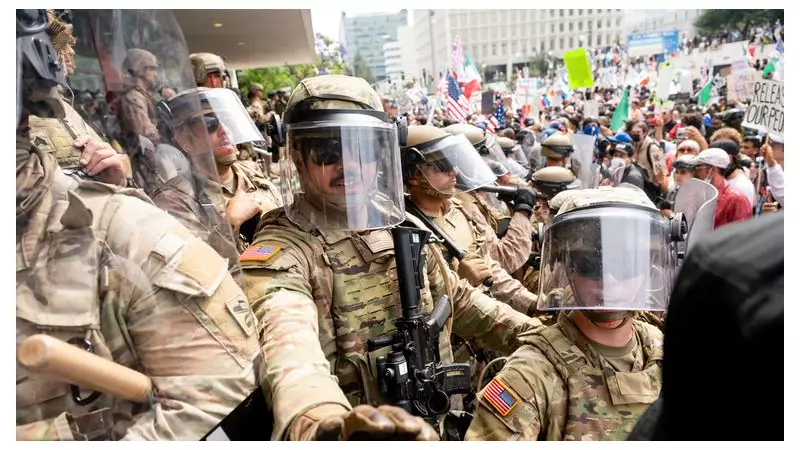
In a significant New Year's Eve announcement, President Donald Trump has declared that the US government is ending its controversial deployment of National Guard troops to three major Democrat-led cities: Chicago, Los Angeles, and Portland, Oregon.
A Conditional Withdrawal with a Stark Warning
However, the move, communicated via a social media post on Wednesday 31 December 2025, came with a pointed threat. President Trump warned that federal forces would "come back" to these urban centres should local crime rates begin to increase again. He framed the withdrawal not as a concession but as a testament to the troops' success, while casting doubt on the competence of local Democratic leadership.
"We are removing the National Guard from Chicago, Los Angeles, and Portland in Oregon, despite the fact that CRIME has been greatly reduced by having these great Patriots in those cities, and ONLY by that fact," Mr Trump stated in his post.

Legal Challenges Hampered Deployment
The president's claim of crime reduction directly attributable to the Guard's presence is contentious, particularly as the deployments faced major legal obstacles. In a key detail, troops sent to Chicago and Portland were never actually deployed to the streets. Their mobilisation was held up by court orders.
In Oregon, a federal judge blocked the deployment, while in Chicago, the effort was stalled by the Supreme Court. The Supreme Court's action, though not a final ruling, represented a notable and unusual setback for the administration from the nation's highest court.
The deployment in Los Angeles earlier in 2025, part of a broader crackdown on crime and immigration, had already been scaled back following a court ruling earlier in December. Legal challenges also emerged in Washington D.C., where the District's Attorney General, Brian Schwalb, brought a case to halt the deployment of over 2,000 guardsmen.
A Controversial Policy Set to Continue?
The use of the National Guard, a reserve military force typically reserved for domestic emergencies like natural disasters or major civil unrest, became a signature and divisive policy of the Trump administration throughout 2025. Democrats have consistently accused the White House of overreaching its federal authority and exaggerating instances of violence to justify the deployments.
President Trump's New Year's Eve message made clear that this tool remains firmly in his political arsenal for the coming year. "We will come back, perhaps in a much different and stronger form, when crime begins to soar again - Only a question of time!" he declared, indicating that 2026 could see further such orders.
He concluded with a rhetorical jab at local officials: "It is hard to believe that these Democrat Mayors and Governors, all of whom are greatly incompetent, would want us to leave, especially considering the great progress that has been made???" The stage is now set for continued tension between federal and local authorities over policing and security in America's cities.