Trump's Framed Putin Photo in White House Sparks Bipartisan Controversy
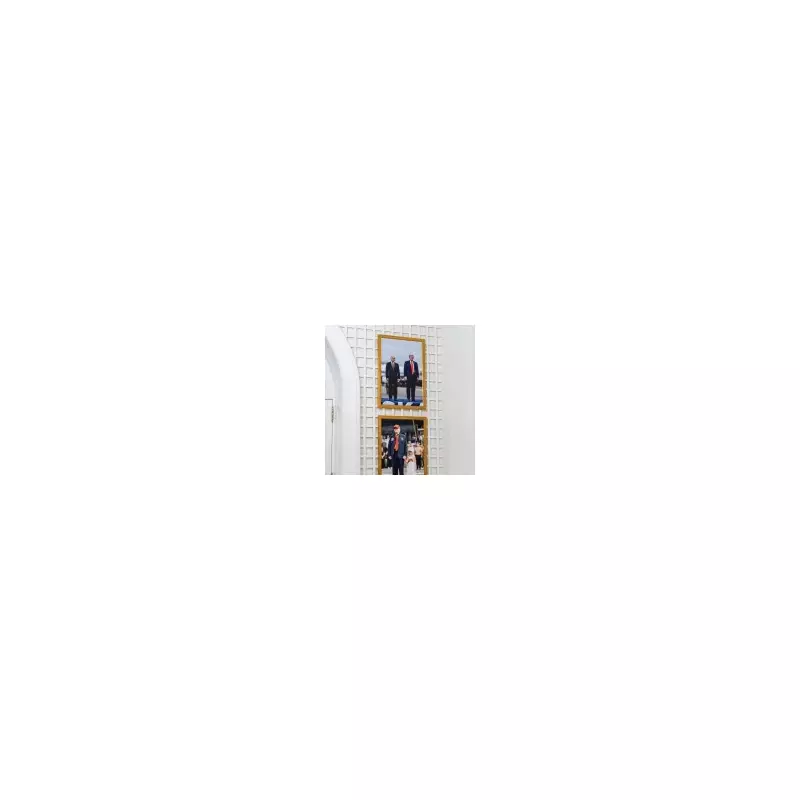
A framed photograph of former President Donald Trump alongside Russian leader Vladimir Putin has been prominently displayed in the White House, positioned directly above a cherished family snapshot featuring Trump and his granddaughter, Sarah Hooper. This unexpected visual statement was first observed by a journalist navigating the corridors between the West Wing and the main residence, specifically within the Palm Room, a space traditionally reserved for diplomatic and personal memorabilia.
Symbolic Placement Draws Immediate Reactions
The image captures a moment from last year's high-stakes meeting in Alaska, where the two leaders convened in an attempt to broker a peace agreement for the ongoing conflict in Ukraine. While Russian officials have lauded the display, with key negotiator Kirill Dmitriev remarking, 'Good. A picture is worth a thousand words,' American political figures have expressed stark disapproval.
Democrat Mark Warner, serving as vice chair of the Senate Intelligence Committee, voiced his concerns sharply, stating, 'Putting Putin above the American people and his own family. Almost a little too on the nose.' This sentiment underscores the tension surrounding the photo's placement, which many interpret as a symbolic prioritisation of international diplomacy over domestic allegiances.

Broader Context of Trump's Peace Initiatives
This visual gesture aligns with Trump's recent diplomatic overtures, including an invitation extended to Putin to join a newly established 'Board of Peace.' This council is tasked with outlining the framework and managing financial resources for the redevelopment of Gaza, a move confirmed by Kremlin spokesperson Dmitry Peskov. He noted, 'Indeed, President Putin also received an offer through diplomatic channels to join this Peace Council. At the moment, we are studying all the details of this proposal.'
However, Putin's potential involvement raises significant eyebrows, given his role in orchestrating a nearly four-year war that has devastated large swathes of Ukraine. Peace negotiations remain fraught with challenges, as evidenced by recent disruptions.
Ongoing Stalemate in Ukraine Peace Talks
Despite apparent efforts to mend relations with Russia, recent trilateral discussions involving the United States, Russia, and Ukraine have faltered. Last week, violence erupted during talks in Abu Dhabi aimed at finding a resolution to the prolonged invasion, following fresh drone strikes in Kyiv. These attacks resulted in at least one fatality in the capital and wounded nineteen individuals in Kharkiv, where a maternity hospital sustained damage.
The deadly bombardment cast a shadow over the much-anticipated negotiations, highlighting the persistent volatility in the region and the complexities of achieving a sustainable peace agreement.
Implications for U.S. Foreign Policy
The display of the Trump-Putin photo, coupled with the invitation to the Peace Board, signals a contentious shift in U.S. foreign policy under Trump's influence. It reflects a willingness to engage directly with figures associated with prolonged conflict, while simultaneously drawing criticism for perceived insensitivity to the human cost of the war in Ukraine.
As debates continue over the appropriateness of such symbolic acts, the situation underscores the delicate balance between diplomatic outreach and domestic political accountability in addressing international crises.