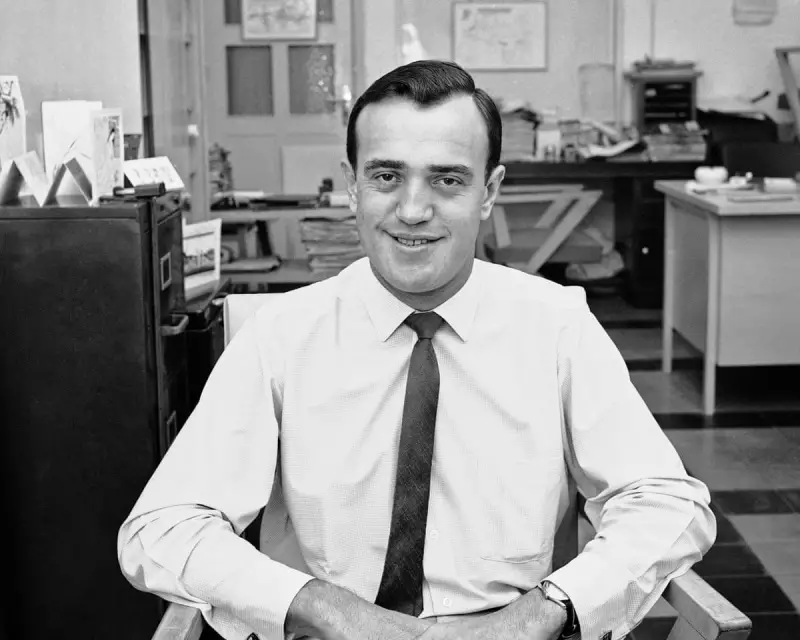
The world of journalism has lost one of its most intrepid voices with the death of Peter Arnett, the Pulitzer Prize-winning correspondent whose frontline dispatches defined war reporting from Vietnam to Iraq. He was 91.
From New Zealand to the World's War Zones
Born in Riverton, New Zealand, on 13 November 1934, Arnett's journey into journalism began at his local paper, the Southland Times. A planned move to London was diverted by a stop in Thailand, where he fell in love with Southeast Asia. This led to work for the Bangkok World and its sister paper in Laos, forging connections that would land him a job with the Associated Press (AP) as its Indonesia correspondent in 1961.
His AP tenure in Indonesia was brief; he was expelled after reporting on the country's economic troubles. By 1962, he was in Saigon, joining a formidable bureau that included Malcolm Browne and Horst Faas. Arnett credited Browne with teaching him vital survival skills for war zones, such as never standing near a medic or radio operator, as they were prime targets.

A Pulitzer in Vietnam and Historic Broadcasts from Baghdad
Arnett covered the Vietnam War from 1962 until the fall of Saigon in 1975. His courageous reporting, which included narrowly escaping death when a sniper killed a lieutenant colonel standing next to him in January 1966, earned him the 1966 Pulitzer Prize for International Reporting.
He remained with the AP until 1981, then joined the nascent CNN. A decade later, he became a household name. As almost all Western journalists fled Baghdad ahead of the US-led attack in 1991, Arnett stayed. From his hotel room, he delivered live, calm telephone reports to CNN as missiles struck the city, his New Zealand accent a steady presence amidst air-raid sirens. He later secured exclusive, controversial interviews with both Saddam Hussein and Osama bin Laden.
Controversy and a Lasting Legacy
Arnett's career was not without controversy. He resigned from CNN in 1999 after the network retracted a report on the use of nerve gas in Laos, which he narrated but did not produce. In 2003, while covering the Iraq War for NBC, he was fired for criticising US war strategy in an interview with Iraqi state television, remarks denounced as anti-American back home.
Undeterred, he was hired within a week by broadcasters in Taiwan, the UAE, and Belgium. He later taught journalism at China's Shantou University before retiring in 2014 to Fountain Valley, California.
Arnett died on Wednesday in Newport Beach, California, surrounded by family and friends, his son Andrew confirmed. He had recently entered hospice care while suffering from prostate cancer.
He is survived by his wife, Nina Nguyen, and their children, Elsa and Andrew. The archival papers he saved from the Saigon bureau's closure, believing in their historic value, now reside in the AP's archives, a fitting legacy for a reporter who dedicated his life to documenting history from its most dangerous front lines.