A stark new report has laid bare the escalating financial and human cost of the climate crisis, revealing that the ten most expensive climate-related disasters of 2025 resulted in insured losses exceeding $120 billion.
A Global Toll of Death and Destruction
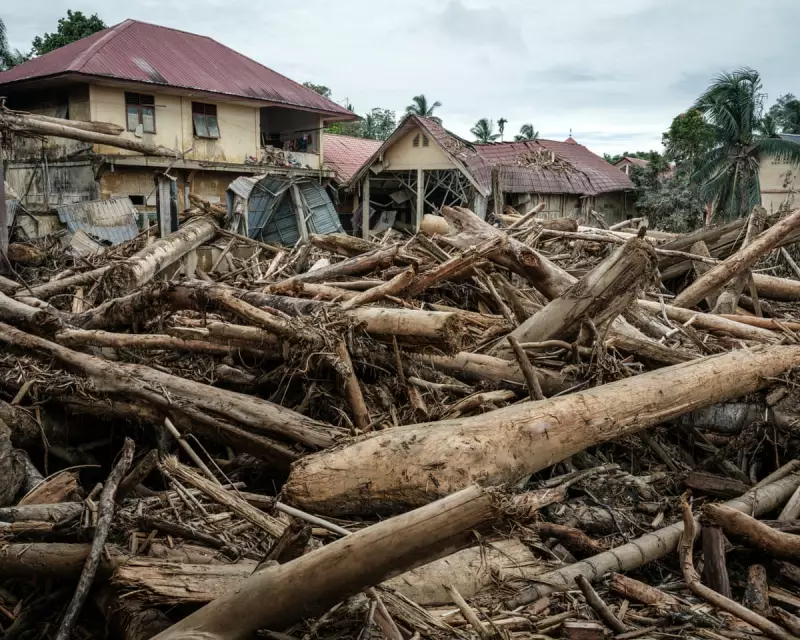
The annual study from the charity Christian Aid highlights a catastrophic year of extreme weather events across the globe. In south-east Asia this autumn, a series of cyclones and floods killed more than 1,750 people and caused damage estimated at over $25 billion.
Meanwhile, wildfires in California proved devastatingly costly, with a death toll surpassing 400 people and an economic impact of around $60 billion. China experienced its own tragedy, where severe floods displaced thousands and caused approximately $12 billion in damage, claiming at least 30 lives.

The True Cost is Far Greater
The report's authors stress that the $120 billion figure for insured losses is a significant underestimate of the true scale of devastation. This metric only captures losses where insurance was in place, predominantly in wealthier nations. The immense human costs—in terms of lives lost, communities displaced, and livelihoods destroyed—remain largely unquantified.
Professor Joanna Haigh, emeritus professor of atmospheric physics at Imperial College London, stated that the increasing frequency and intensity of these damaging events is a direct consequence of the human-made climate crisis. "The world is paying an ever-higher price for a crisis we already know how to solve," she said. "These disasters are not 'natural' – they are the inevitable result of continued fossil fuel expansion and political delay."
A Crisis Disproportionately Felt by the Vulnerable
While the economic cost often appears higher in developed countries due to widespread insurance coverage, the real burden falls heaviest on the global south. Mohamed Adow, director of the Power Shift Africa thinktank, emphasised this disparity: "While wealthy nations count the financial cost of disasters, millions of people across Africa, Asia and the Caribbean are counting lost lives, homes and futures."
The report catalogues a relentless series of global catastrophes beyond its top ten list:
- Typhoons in the Philippines displaced 1.4 million people and caused $5 billion in damages.
- Floods in India and Pakistan killed over 1,860 people, affected more than 7 million in Pakistan alone, and cost about $6 billion.
- Floods in the Democratic Republic of the Congo and Nigeria led to 700 deaths.
- Drought in Iran threatens the 10 million inhabitants of Tehran with potential evacuation.
- Even developed nations were not spared, with record fires in Iberia, droughts in Canada, and unprecedented heatwaves in Scotland.
At the recent COP30 UN climate summit in Belém, rich countries agreed to triple finance for climate adaptation in poor countries by 2035. However, Christian Aid's chief executive, Patrick Watt, warned this will still fall short. "The bill for extreme weather damages will continue to rise until the world slashes greenhouse gas emissions and phases out fossil fuels," he said, calling for accelerated action.
Despite this urgency, efforts at COP30 to create binding roadmaps for a fossil fuel phase-out were downgraded to a voluntary initiative. Work on this critical task will begin this year, led by host nation Brazil and supported by over 80 countries at a special conference in Colombia this April.