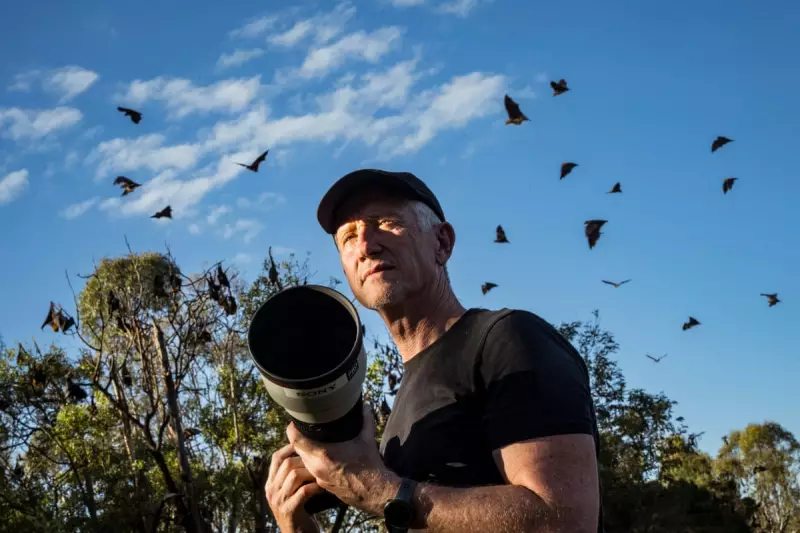
Armed with a camera and a mission, conservation photojournalist Doug Gimesy has dedicated himself to transforming the public image of one of Australia's most misunderstood mammals: the flying fox. Through an intensive project spanning over 160 days in the field, Gimesy has amassed a staggering collection of approximately 50,000 images documenting all four mainland species.
Capturing the Character of 'Sky Puppies'
Gimesy's work goes beyond simple documentation; it seeks to trigger an emotional connection. His extreme close-ups, which he hopes show the animals' 'puppy-like' faces, are designed to replace fear with awe and empathy. He highlights their fascinating behaviours, from using their wings as umbrellas and blankets to the tender care they show their young.
"I find them the most incredible mammals," Gimesy says, pointing to their long-distance flight, crucial role as pollinators, and dedicated parenting. One particularly challenging shot, dubbed 'baby on board', required more than 30 days of patient effort at dusk and dawn to perfectly capture a mother flying with her pup.

Why Image Matters for Survival
The push to reshape perceptions is urgent. Habitat destruction has forced flying foxes into closer contact with humans, often setting up camps in urban areas. Negative views can directly threaten their survival, limiting conservation support and sometimes leading to harassment or illegal killing. This is critical for species like the endangered spectacled flying fox and the vulnerable grey-headed flying fox.
Dr Merlin Tuttle, a bat expert with over 65 years of experience, underscores the power of imagery. "A picture can be absolutely essential for winning progress for bats," he states, noting that seeing bats as curious and gentle is far more effective than just being told. He praises Gimesy's "unsurpassed" passion and work in this field.
From Vilification to Vital Conservation
Gimesy's photography also starkly documents the threats flying foxes face. One powerful image shows a grey-headed flying fox tragically entangled in fruit-tree netting, a victim of human-wildlife conflict. Another captures veterinarian Sarah Frith aiding a pup suffering from heat stress.
Matthew Mo, a senior threatened species officer, agrees that public understanding is key. "The more that people understand these so-called 'sky puppies', the more they accept them," he explains. This acceptance is vital for conservation, as flying foxes are indispensable for spreading pollen and seeds to maintain healthy forests.
For Gimesy, whose background is in zoology and bioethics, the goal is clear: use compelling visuals to educate and inspire love for these remarkable creatures. His pride is that his book, Life Upside Down, is now in a third of Australian school libraries, planting the seeds of appreciation in the next generation.