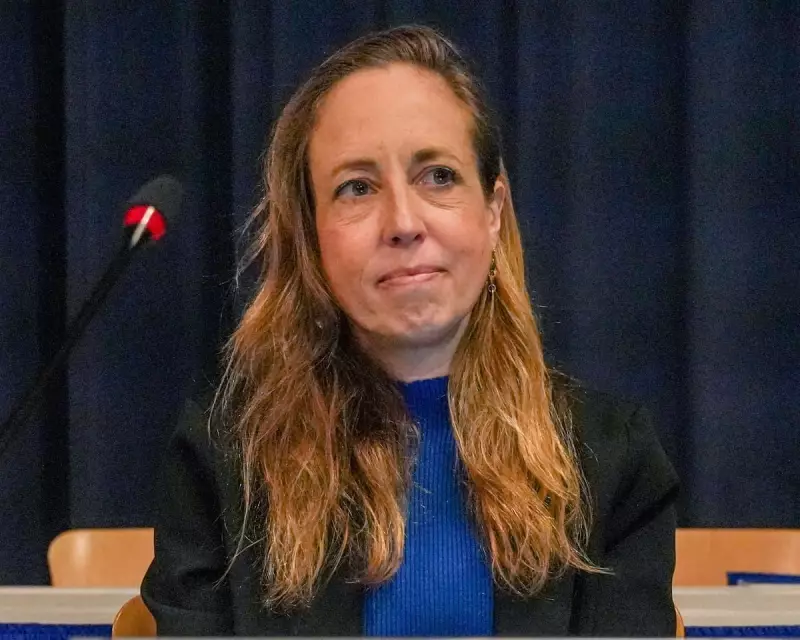
The US Food and Drug Administration (FDA) is undergoing a significant and controversial leadership shift, with the appointment of a figure known for her sceptical stance on Covid-19 vaccinations to a top drug regulation role. Tracy Beth Høeg, a Danish American sports physician and epidemiologist, has been named the acting director of the FDA's Center for Drug Evaluation and Research (CDER).
An Unconventional Appointment Raises Alarms
Høeg's appointment marks a stark departure from the norm for leaders of the powerful CDER, which oversees the approval and safety of thousands of medications in the United States. She is the fifth person to lead the centre this year. Critics point out that she has no apparent background in drug development, regulation, or managing a large organisation – experience typical of past directors.
"She doesn't seem to have any of the qualifications," said neurologist and psychiatrist Dr Jonathan Howard, who has tracked Covid contrarians. "She's never run a randomised controlled trial. She has no expertise leading a large organisation. She has no expertise in industry regulation or drug approvals."

Janet Woodcock, a former acting FDA commissioner and former CDER director, echoed these concerns, stating that past directors would "understand laws and regulations and the science of drug development." She added, "Objectively, she doesn't have the kind of background that previous people who ran CDER have had."
A Focus on Vaccines, Not Drugs
Despite her new role in drug regulation, Høeg's public focus has remained squarely on vaccines, an area typically managed by a separate FDA centre. She first gained prominence during the pandemic by casting doubt on Covid-19 vaccines and focusing on potential adverse events. Her work includes a study using unconfirmed crowd-sourced data to estimate rates of heart inflammation post-vaccination.
Her appointment appears to signal closer collaboration with Dr Vinay Prasad, head of the FDA's vaccine centre (CBER), with whom she has co-authored research. This partnership suggests a greater agency focus on re-evaluating and potentially dismantling existing vaccine recommendations. Health officials had planned to announce major changes to the childhood immunisation schedule earlier this month, aligning it more closely with Denmark's, but postponed the announcement.
Høeg has frequently advocated for the US to drop certain childhood vaccine mandates to mirror Denmark, a country with a vastly different healthcare system and population size. In presentations, she has questioned the safety of aluminum adjuvants in vaccines and the practice of giving multiple shots concurrently—positions at odds with established CDC guidance.
Broader Implications for US Public Health
The leadership change occurs amidst other controversial moves, including a new priority voucher programme for rapid drug approvals that reportedly troubled Høeg's predecessors. Observers like Dr Howard warn of a trend toward "laxer regulations of all drugs, except for vaccines," where scrutiny seems to be increasing.
Public health experts stress that the US faces unique challenges compared to Denmark, including different disease patterns and a less cohesive healthcare system. Adam Langer of the CDC highlighted that over 500,000 pregnant people in the US are never tested for hepatitis B annually, and many infants are lost to follow-up, making blanket adoption of another nation's vaccine schedule potentially dangerous.
Raymond Pollak, a transplant surgeon and immunisation adviser, noted, "Our patient population in the United States is very different culturally" from Denmark's. The Nordic nation does not routinely vaccinate against several diseases common in the US, leading to tens of thousands of vaccine-preventable illnesses each year.
The situation has prompted significant concern within the medical establishment. In December, 12 former FDA commissioners published a warning in the New England Journal of Medicine about a lack of transparency in recent vaccine regulation changes. Janet Woodcock, a signatory, stated that the current process departs from the rigorous, evidence-based debate that traditionally underpinned FDA decisions.

"You can just make decisions because you have the pen and say: 'It's because I said so,'" Woodcock said. "But that doesn't lead to, over time, a lot of trust in the system." As Høeg assumes her role overseeing more than 5,000 employees and a vast regulatory portfolio, the direction of one of the world's most influential health agencies hangs in the balance.