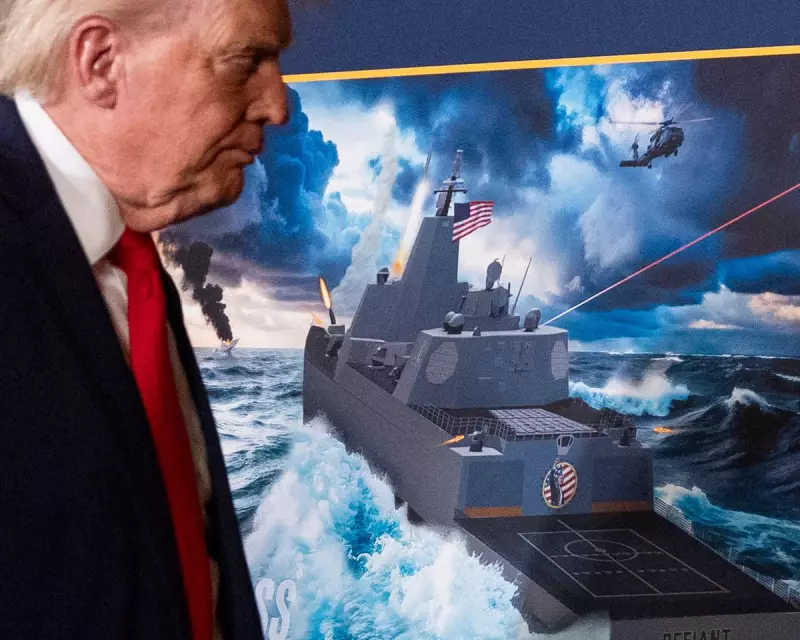
The geopolitical temperature has soared following Donald Trump's speech at his Mar-a-Lago club in Florida on 22 December 2025, where he renewed controversial claims over Greenland. The US President's assertion that Russia and China are scheming to seize the vast Arctic island, and that Denmark should urgently transfer sovereignty, has triggered a chain reaction of military posturing from European allies.
A Recipe for Escalation
In what would recently have seemed a satirical plot, nations including Norway, Sweden, France, and Germany have begun sending troops to Greenland this week, with Britain even dispatching a military officer. This deployment is a direct response to fears of a potential US action, coming hot on the heels of Trump's leadership putsch in Venezuela and threatened assault on Iran. The move, as columnist Simon Jenkins argues, is precisely the kind of panic that plays into the US President's hands, raising global temperatures and generating the climate of fear he often exploits.
The situation evokes memories of the 25th Amendment discussions during Trump's first term, when his capacity for office was questioned after the January 6 Capitol insurrection. Today, Jenkins notes, "the trouble is that there are no grownups" in Washington to provide a check. Trump's designs on Greenland, which enjoys full defence cooperation with the US through NATO, appear without clear strategic justification from his staff, resembling the impulsive grabs of a "shoplifting addict" for resources like oilfields and critical minerals.

The Perils of Fear-Driven Policy
Jenkins warns that Western defence lobbies are dangerously talking up the prospect of a "third world war," using the "grey-zone" aggressions of Russia and China to justify escalations. He contends that China does not pose an existential threat to Britain, nor has it ever, and that while Russia's invasion of Ukraine was outrageous, declaring it a direct threat to British territorial security is a different matter. He references warnings from Henry Kissinger and Kremlinologists that NATO's eastward expansion after the Cold War tested Russian paranoia, yet Moscow has never invaded a NATO member state.
The columnist is critical of figures like former British army chief Lord Dannatt for portraying the Ukraine war as an overture to a global conflict, arguing this only adds to Russian belligerence. "I sometimes feel the military establishment craves war," Jenkins writes. This context makes the Greenland dispute particularly volatile, as it possesses the potential to split and severely weaken the NATO alliance.
The Case for Cool Heads and Stalling Diplomacy
With east-west emotions at a "tender stage," Jenkins asserts that the crisis over Greenland is one that merits stalling and slow diplomacy above all else. When "tub-thumping generals and politicians seize the microphone from diplomats and peacemakers, all sanity vanishes." He argues that allies must avoid falling into Trump's trap of using vacuous national security arguments to shut down debate.
Domestically, Jenkins takes aim at Labour leader Keir Starmer's promise to divert billions from domestic budgets to hire soldiers and buy weapons, potentially for deployment to Ukraine or Greenland, to burnish his foreign policy credentials. "He should not do so," Jenkins states firmly, arguing that such interventions have "nothing to do with the defence of Britain."
The path forward, according to this analysis, lies in recognising the resilience of US institutions—the term limit that will see Trump gone in three years and the likely rebalancing of power after the midterm elections. Until then, the wisest course for Europe is not military mobilisation that feeds the frenzy, but calm, deliberate diplomacy to navigate a dispute that risks spiralling far beyond the frozen shores of Greenland.