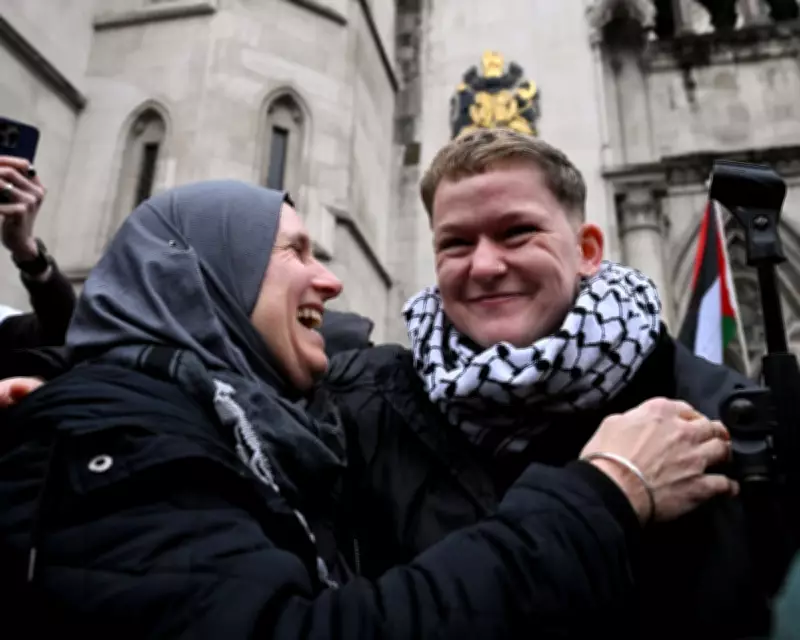
High Court Judges Deliver Stinging Rebuke to Government Over Protest Ban
In a landmark decision that represents a significant embarrassment for the government, three senior high court judges have ruled that the ban on the direct action group Palestine Action was unlawful. The judges declared the proscription "disproportionate" and stated it unjustifiably impinged on freedom of speech and protest rights.
A Controversial Proscription From the Start
The ban, first announced by then Home Secretary Yvette Cooper in June last year, has been fiercely controversial since its inception. Under the Terrorism Act 2000, "serious property damage" qualifies as grounds for proscription, but this legislation had previously only been applied to groups like Islamic State and Boko Haram that engage in violence against persons.
Palestine Action, which targets UK sites of Israeli arms manufacturer Elbit Systems and other entities it accuses of complicity in Palestinian suffering, represented a novel application of these powers. The group's focus on property rather than personal violence created immediate legal and ethical questions.

The list of critics was remarkably diverse, including:
- A former Trump administration official
- Former director of public prosecutions
- Former security services director
- Home Office officials
- Politicians across party lines
- United Nations experts
- Numerous non-governmental organizations
Legal and Practical Implications of the Ban
The ruling highlights how the UK stands among few countries where recklessly expressing support for a proscribed organization constitutes a criminal offense. Never before had a direct action protest group faced such a ban, fueling perceptions that suppressing pro-Palestinian voices took precedence over other considerations.
Government documents revealed during the judicial review painted a contradictory picture. The Joint Terrorism Analysis Centre, while recommending the ban, acknowledged Palestine Action "primarily uses direct action tactics" typically resulting in minor property damage through "graffiti, petty vandalism, occupation and lock-ons."
Whitehall officials conceded the proscription would be "relatively novel" without precedent for an organization banned mainly for property damage concerns.Police Response and Civil Disobedience
Following the ban's implementation, a campaign of civil disobedience emerged alongside the legal challenge. Police interventions generated further controversy, with the Metropolitan Police Federation describing extra demands from repeated demonstrations as "unsustainable."
Notable incidents included:
- Laura Murton threatened with arrest by armed officers for holding a "Free Gaza" sign and Palestinian flag
- Marianne Sorrell, a retired teacher, detained for nearly 27 hours after displaying a placard opposing genocide
- Jon Farley arrested for carrying a Private Eye magazine graphic about acceptable versus unacceptable actions
Political Context and External Pressures
The advocacy groups We Believe in Israel and Campaign Against Antisemitism had pressed for the proscription. Previous Guardian revelations showed meetings between Elbit representatives, Israeli embassy officials, and Conservative government figures apparently focused on cracking down on the group.
In the parliamentary vote lead-up, the Home Office briefed The Times about investigating possible Iranian funding for Palestine Action—a claim later distanced from by the department and described by terrorism legislation reviewer Jonathan Hall KC as "nudge-nudge, wink-wink" insinuation without foundation.
Additional complications emerged when two neo-Nazi groups were included on the same banning order, forcing MPs to vote on banning all three organizations simultaneously.Judicial Findings and Future Implications
The judges acknowledged that "a very small number of Palestine Action's activities amounted to acts of terrorism" under the 2000 act's definition. However, they ruled the government's response disproportionate given existing criminal law could address these activities without resorting to proscription.

This ruling transforms Palestine Action from a relatively obscure protest group into a nationally recognized entity, while delivering what legal experts describe as a humiliating defeat for government counter-terrorism policy. The decision raises fundamental questions about balancing security concerns with fundamental democratic rights to protest and free expression.