Dublin Fuel Protests Expose Ireland's Fossil Fuel Dependence and Political Disconnect
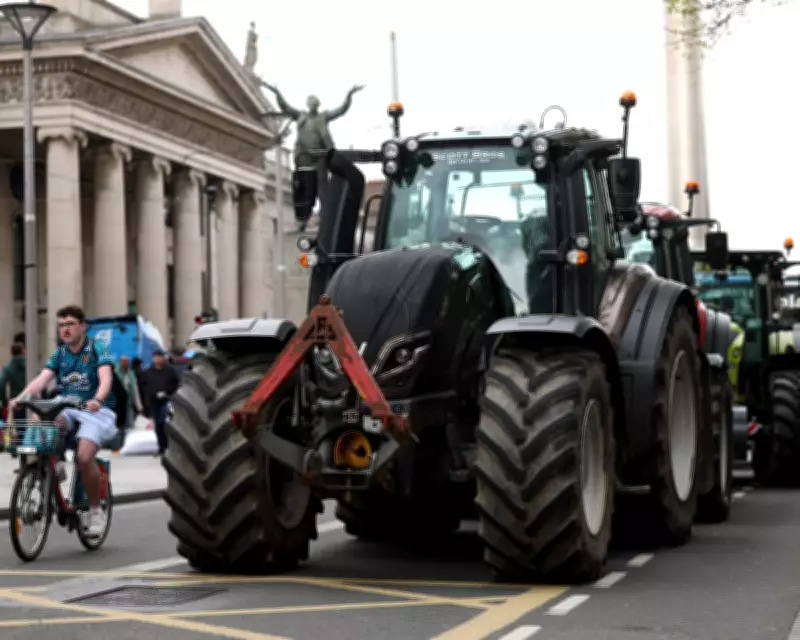
On O'Connell Street in Dublin, Ireland, during the fourth day of national fuel protests on April 10, 2026, a lime green CLAAS tractor stood as a symbol of grassroots unrest. A young agricultural worker named Dylan, aged 19, recounted being the second tractor to arrive, with his boss's vehicle ahead bearing a stark warning: "No Farms, No Food." Alongside two teenage friends, Dylan endured nights in the biting April cold, joining farmers, fishers, and truckers whose vehicles lined the historic street, named for 19th-century nationalist Daniel O'Connell, known for convening massive protest meetings.
Government Policies and Public Outcry
Dylan articulated a common grievance among protesters, stating, "It's profit before people," in reference to the government's imposition of 60% duties and taxes on fuel during a crisis. He warned that escalating costs could soon impact food prices, making essentials unaffordable for many. The protests, which spanned six days, blocked motorways, ports, and Ireland's sole oil refinery in County Cork, as well as fuel depots in Limerick and Galway. By the week's end, petrol stations began running dry, amplifying public anxiety.
Despite government ministers condemning the demonstrations as "wrong" and a threat to national security—with the justice minister even threatening military intervention—solidarity flourished on Dublin's streets. A local woman delivered sandwiches to protesters, urging them to "keep going," while a survey revealed 56% public support. The protests drew international attention, underscoring a deep-seated frustration with political leadership.

Broader Implications of the Iran War and Energy Crisis
The illegal war on Iran, denounced by the Irish president, has exacerbated global oil price shocks, laying bare Ireland's acute dependency on fossil fuels and volatile supply chains. This crisis has highlighted successive governments' failures to plan for a just transition to clean energy. Protesters' direct action, including blockades and symbolic displays like a coffin painted with "RIP Ireland," forced the government to announce concessions worth €500 million, including cuts to excise duty and potential delays to carbon tax increases.
However, a no-confidence vote scheduled for Tuesday is unlikely to unseat the coalition of centre-right Fianna Fáil and Fine Gael parties, despite mounting criticism of their mishandling of the situation. Many protesters, like Dylan, expressed disillusionment with political parties, noting a vacuum of trust in traditional representative groups.
Social Divisions and Grassroots Movements
The protests were complicated by agitators promoting anti-immigrant conspiracies and violent rhetoric, with some speakers known for misogynist views. The Muslim Sisters of Éire, who run a soup kitchen on O'Connell Street, reported experiencing xenophobic comments, though they still supported the fuel protesters' core objectives. Dylan emphasized that for him, the protest was "solely about the price of fuel," and he witnessed attempts to co-opt it for unrelated agendas, fearing it could provoke police backlash.
This dynamic reflects broader societal issues, as government policies have deepened inequality during years of economic growth, fueling far-right fringe elements that scapegoat migrants for housing and cost-of-living crises. Climate justice, reliant on equality and a fair transition from fossil fuels, is undermined by corporate interests, such as data centers in Ireland consuming more electricity than all urban homes combined.
Urgent Questions and Future Directions
Beyond immediate fuel prices, the protests raise critical questions about Ireland's over-reliance on fragile global markets. The country imports over 80% of its fruit and vegetables, while many protesting farmers export their harvests. Lasting change cannot be enforced through suffering and inequality; instead, Ireland must join efforts like Spain's push for EU taxes on oil and gas industries profiting from the Iran crisis.

As Dylan and others highlighted, dehumanizing working people only exacerbates divisions. The protests underscore a pressing need for sustainable solutions that address basic needs while transitioning away from fossil fuels, ensuring a future where no one is pushed to the brink.