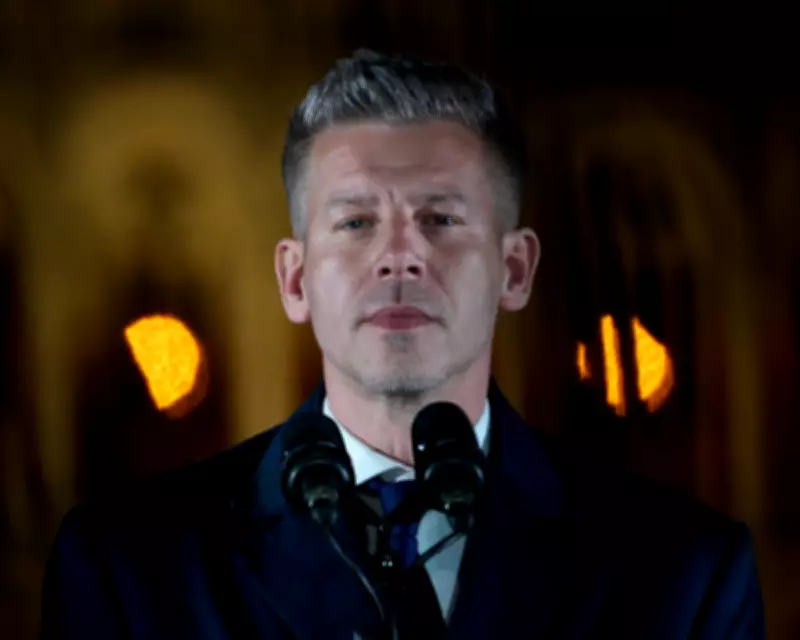
Hungary Enters a New Political Era as Péter Magyar Defeats Viktor Orbán
In a stunning political reversal, Hungary is awakening to a transformed landscape after Péter Magyar's Tisza party secured a decisive victory over Viktor Orbán's long-ruling Fidesz party. Orbán, who has served as prime minister since 2010, conceded defeat less than three hours after polls closed on Sunday, describing the outcome as "painful but unambiguous." This historic shift ends sixteen years of Orbán's dominance and promises to fundamentally alter Hungary's trajectory both domestically and internationally.
A Dramatic Night of Celebration and Change
The atmosphere in Budapest following the election results resembled "more a World Cup triumph than an election night," according to observers on the ground. Crowds danced in streets where such political celebrations are rare, capturing the palpable energy of a nation experiencing profound change. One voter at a Budapest polling station captured the sentiment simply as "vibes"—an intuitive confidence that proved prophetic as results poured in.
With 98.74% of votes counted, Magyar's Tisza party is projected to win 138 of parliament's 199 seats, granting them a supermajority capable of amending the constitution and key legislation. This overwhelming mandate provides Magyar with significant power to implement his promised reforms, though it also brings immense expectations from a population weary of corruption and declining public services.

Who Is Péter Magyar, Hungary's Next Leader?
Péter Magyar represents a fascinating political phenomenon: a 45-year-old lawyer and former government insider who has transformed himself into an anti-establishment figure capable of unseating one of Europe's most entrenched leaders. Once a member of Orbán's Fidesz party with close ties to senior figures—including a former marriage to ex-justice minister Judit Varga—Magyar recast himself as a whistleblower from within the system.
His rapid rise to prominence began in 2024 following a scandal involving a government pardon in a child abuse case, during which he publicly accused Fidesz of self-protection. Tapping into widespread disillusionment over corruption, the cost of living, and neglected public services, Magyar drew large crowds and quickly built the Tisza movement into a formidable political force.
Magyar's appeal lies in his unique combination of insider knowledge and outsider messaging. He has promised to restore democratic checks, repair Hungary's strained relationship with the European Union, and crack down on corruption. However, he has kept many policy details deliberately vague and largely avoided culture-war issues that have characterized Orbán's tenure.
International Reactions and Implications
The international response to Magyar's victory has been swift and celebratory among European leaders. Magyar reported receiving congratulatory calls from French President Emmanuel Macron, NATO Secretary-General Mark Rutte, German Chancellor Friedrich Merz, and European Commission President Ursula von der Leyen.
Spanish Prime Minister Pedro Sánchez declared on social media that "today Europe wins and European values win," while Polish Prime Minister Donald Tusk wrote: "Hungary, Poland, Europe, back together! Glorious victory, dear friends!" British Prime Minister Keir Starmer called it "an historic moment, not only for Hungary, but for European democracy."
Notably absent was immediate reaction from the White House, particularly from US Vice-President JD Vance, who had campaigned for Orbán in Budapest earlier in the week. Vance had openly admitted to being in Hungary on an "unprecedented" trip to help Orbán win reelection while accusing the EU of interfering in Hungary's democracy.
The Daunting Task Ahead
As celebrations subside, attention turns to the monumental challenges facing the new government. "You cannot reverse sixteen years of state capture and institutional vandalism with the snap of a finger," noted one observer. The reconstruction of democratic institutions, revival of an ailing economy, and mending of broken international alliances will require sustained effort and political skill.

Magyar acknowledged the scale of the task in his victory speech, telling the nation: "Today, we won because Hungarians didn't ask what their homeland could do for them—they asked what they could do for their homeland. You found the answer."
For Orbán, the defeat marks a dramatic reversal after nearly two decades of political dominance. He told supporters: "We are going to serve the Hungarian nation and our homeland from opposition as well," suggesting his political career may continue despite this significant setback.
The coming months will test whether Magyar can translate his electoral victory into tangible improvements for Hungarians who have grown disillusioned with politics. With a supermajority in parliament and significant public mandate, he possesses the tools for transformation—but also faces extraordinarily high expectations from a population eager for change after sixteen years of Orbán's rule.