

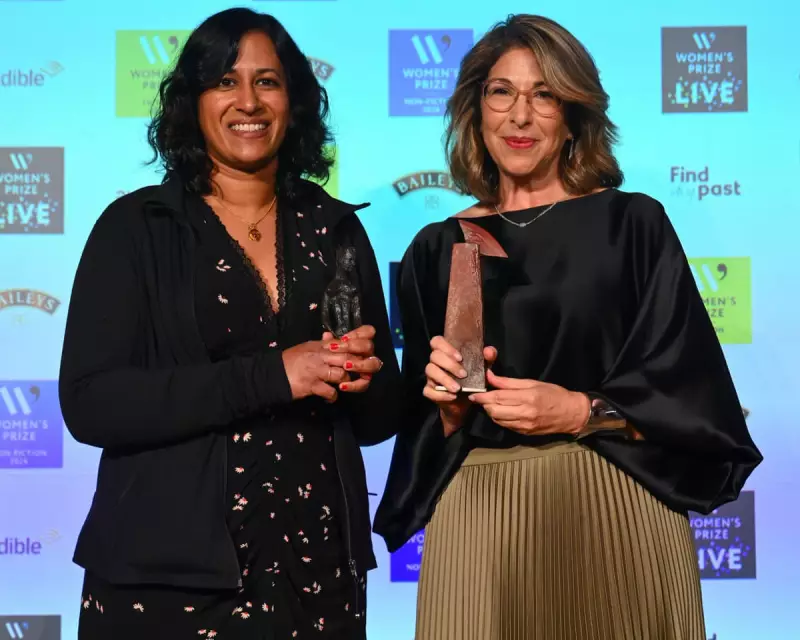
As the prestigious Women's Prize for Fiction celebrates its 30th anniversary in 2026, a provocative question resurfaces in literary circles: has the remarkable success of female authors inadvertently pushed male novelists to the margins?
A Legacy Born from Exclusion
The award, originally known as the Orange Prize and later the Baileys Prize, was founded in 1996 as a direct response to the all-male Booker Prize shortlist of 1991. Its mission was to rectify a glaring imbalance in recognition. Three decades on, the landscape has transformed dramatically. The Booker has not seen an all-male shortlist in twenty years, and a powerhouse generation of writers from Margaret Atwood to Sally Rooney has cemented women's central place in contemporary fiction.
Yet, this very success fuels debate. Following David Szalay's Booker win in 2025 for Flesh, commentators noted a decade dominated by novels of "female interiority," asking where the stories about young men have gone. Is the literary world now overlooking male voices?

From 'Lady Novelists' to Literary Leaders
To understand the present, critic Catherine Taylor, author of The Stirrings: A Memoir in Northern Time, reflects on the past. Entering the industry in the early 1990s, she found a scene dominated by male titans like Martin Amis. "It was very male-dominated," Taylor recalls. "The atmosphere was about how there needs to be a redress."
She describes a time when even studying female authors was a struggle. "When I studied English at university at the end of the 80s, the only female writers on my curriculum were two of the Brontë sisters, George Eliot, and Jane Austen. And I had to ask permission to write my dissertation on Virginia Woolf." The change, she stresses, was gradual, propelled by awards like the Women's Prize and a shift in publishing demographics, with younger women commissioning more representative stories.
The Data Behind the Domination Debate
Despite perceptions of female domination, the numbers reveal a more nuanced picture. Taylor points out that twice as many men as women have won the Booker prize. Samantha Harvey's 2024 win was the first by a woman in five years, following the joint award to Margaret Atwood and Bernardine Evaristo in 2019.
Consumer data adds critical context. In 2023, women bought 63% of all fiction in the UK. Crucially, 2024 research commissioned by the Women's Prize found that while women read authors of both genders equally, men "overwhelmingly reject" books by women in favour of male authors. This suggests the prize's mission to platform women's writing remains sharply relevant.
Taylor strongly objects to characterising women's fiction as merely 'interior' or 'domestic'. "Nobody calls men's writing interior or inward when they're writing about male subjects," she argues, citing Samantha Harvey's space-set novel Orbital as an example of ambitiously external themes. She celebrates the boldness of contemporary women's writing in exploring desire, the body, and systemic oppression.
The conversation also touches on influence and legacy. Taylor notes how male authors have historically used women's novels as springboards, citing Martin Amis's debt to writers like Muriel Spark and his stepmother, Elizabeth Jane Howard—an author often reductively labelled in her time as a writer of 'women's novels'.
As the Women's Prize enters its fourth decade, the debate it sparks is evidence of its profound impact. The journey from needing permission to study Woolf to debating the market share of women's fiction marks a seismic shift. However, with reading habits still divided along gender lines and major prizes yet to achieve parity, the literary world's evolution is, as Taylor notes, a "slow-moving revolution" far from complete.






