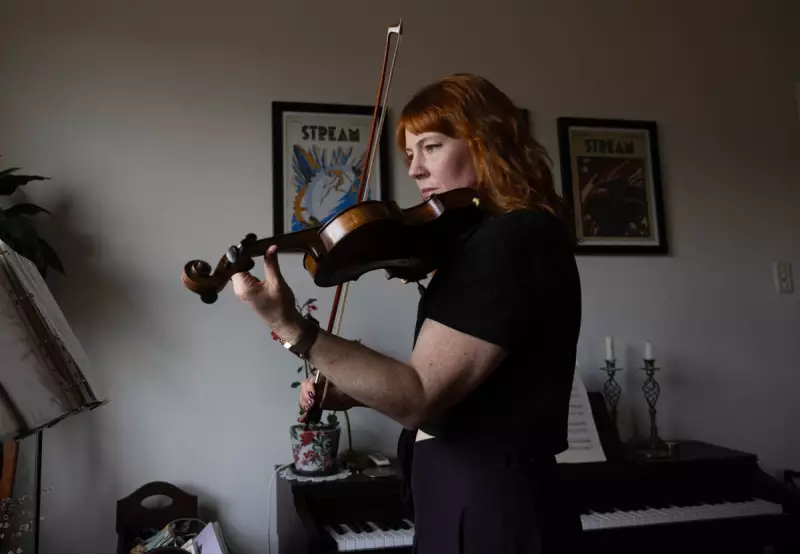
Embarking on the journey to learn the violin at the age of 40 is not a decision made lightly. For one Australian writer, it meant confronting an instrument renowned for its unforgiving nature, armed only with a 120-year-old family heirloom and a determined spirit.
The Heirloom and The Humble Beginning
The violin itself is a piece of living history. Imported from Europe before the first world war by a German-Lutheran great-great-grandfather who farmed in western Victoria, it passed through generations. It arrived in a battered state over a century later, following the death of a great-aunt, prompting the writer's mother to promise restoration if any of her children chose to learn. This year, that promise was fulfilled.
With apologies issued to downstairs neighbours, the beginner found a teacher—a well-known Melbourne fiddle maestro—and had a first lesson in July on the restored instrument. The initial foray confirmed a universal truth: nobody sounds good when they first play a violin. Unlike a fretted guitar, finding the correct pitch relies entirely on the ear, a challenge even for someone with prior piano and choral training.

A Strategy of Sonic Immersion
The learning strategy adopted was deliberately bold: embrace the horror. The theory was simple—the fastest way to move past the ear-splitting screeching phase was to subject household members, neighbours, and a terrified cat to as much of it as possible, as quickly as possible. This led to a rigorous routine of daily practice, spanning 30 minutes to two hours.
Surprisingly, amidst the cacophony, a love affair with the instrument began. The act felt expressive and all-encompassing, akin to singing, despite the sound resembling fingernails on a blackboard. The writer also discovered the violin's existential fussiness; it is an instrument sensitive to humidity, dryness, and even sunlight, all of which can affect its structure and tuning.
The Paradox of Relaxation and Reward
The central paradox of the violin revealed itself: its greatest difficulty is also its source of joy. To produce a sweet, clear tone, the player must be completely relaxed. Tension causes the bow to judder and scrape. Achieving the necessary mindfulness and calm is a tall order for a beginner, yet the discipline of daily practice began to foster exactly that state. The violin, by its demanding nature, required and cultivated undivided attention, becoming a form of meditation.
The dedication yielded results faster than anticipated. After just six weeks, the introductory workbook was completed, and 'proper' songs were within reach. Before three months had passed, the teacher was assigning grade four repertoire. The milestone of performing five whole songs—none of them nursery rhymes—for an audience of friends marked a moment of immense pride, with the teacher's feedback being a simple, powerful: "You're flying."
What began as a daunting challenge at midlife has transformed into a passionate pursuit. The journey from torment to pleasure underscores a powerful lesson: sometimes, the most rewarding paths require you to first embrace the screech. The goal now is simply to see how high this newfound flight can go.