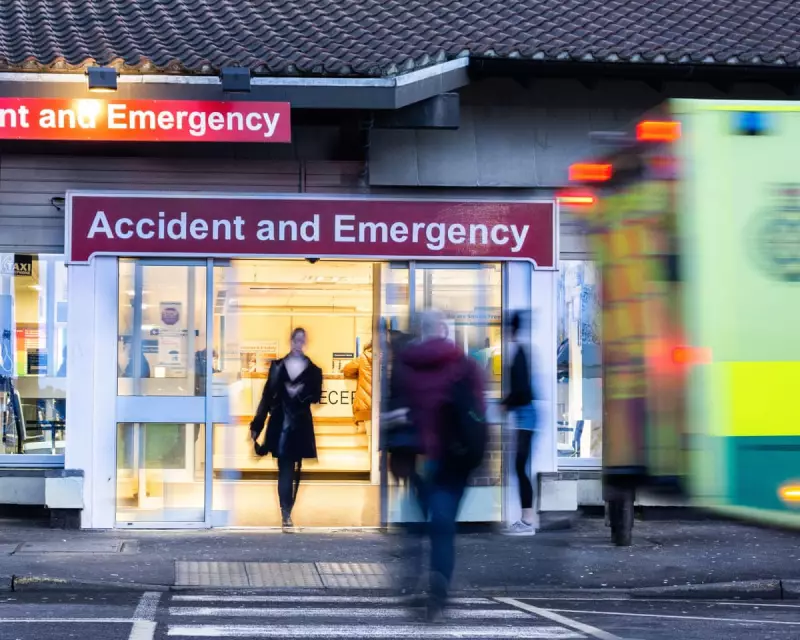
England's accident and emergency departments are facing an unprecedented surge in patients seeking help for minor ailments, from coughs and hiccups to blocked noses, as millions struggle to access timely primary care.
A Tenfold Surge in Non-Emergency Cases
Analysis of NHS data reveals a dramatic and sustained increase in people using emergency wards for conditions that should be treated elsewhere. The most striking example is for coughs, where attendances soared from around 44,000 cases in 2020-21 to 435,728 in 2024-25 – a near tenfold increase.
The trend extends far beyond coughs. In the last five years, A&E doctors saw almost 1.9 million cases for headaches, 1.4 million for a cough, and 1.2 million for a sore throat. Other startling figures include one million attendances for earache, almost 69,000 for a blocked nose, and over 4,200 for hiccups.

Meanwhile, attendances for genuine emergencies like cardiac arrests and broken hips remained relatively stable, underscoring how A&Es are being swamped by inappropriate cases.
A Symptom of a Broken System
Health leaders are clear that this data exposes a fundamental failure in the healthcare system. Daniel Elkeles, chief executive of NHS Providers, stated it "lays bare a failure to give people enough access to convenient, responsive services closer to home."
The figures show that in 2024-25, doctors found no abnormality in 2.2 million A&E attendances, and over half a million patients left before receiving a first diagnosis. Dr Ian Higginson, President of the Royal College of Emergency Medicine, said this is "a symptom of the healthcare system not working as it was designed to," citing a lack of available primary and community care when patients need it.
The pressure comes as Health Secretary Wes Streeting faces scrutiny over NHS progress. Last month, Prof Kamila Hawthorne, chair of the Royal College of GPs, told the Guardian that surgeries lack the core funding to hire more doctors despite soaring demand.
Calls for a 'Turbocharged' Neighbourhood Health Service
The government's long-term plan aims to shift care into communities, but leaders demand faster action. Elkeles called for neighbourhood healthcare to be "'turbocharged' to create many more primary care appointments" and ease A&E pressure.
Henry Gregg, of the National Pharmacy Association, highlighted that many issues could be treated by pharmacists, who can now supply prescription medicines for common illnesses without a GP appointment. "People are spending hours in A&E with issues that could instead be treated in a community pharmacy," he said.
An NHS England spokesperson urged the public to use alternatives like NHS 111 online, pharmacies, or walk-in centres for non-life-threatening care, reserving A&E for serious emergencies. The Department of Health and Social Care said it was "already delivering change" by increasing funding for community pharmacy and building diagnostic centres with extended hours.
However, with attendances for minor conditions skyrocketing, the data presents a stark picture of a health service at a crossroads, where emergency departments have become the default for millions unable to find care elsewhere.